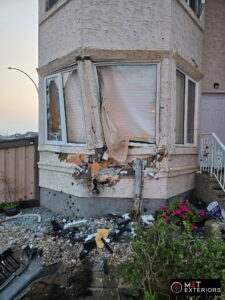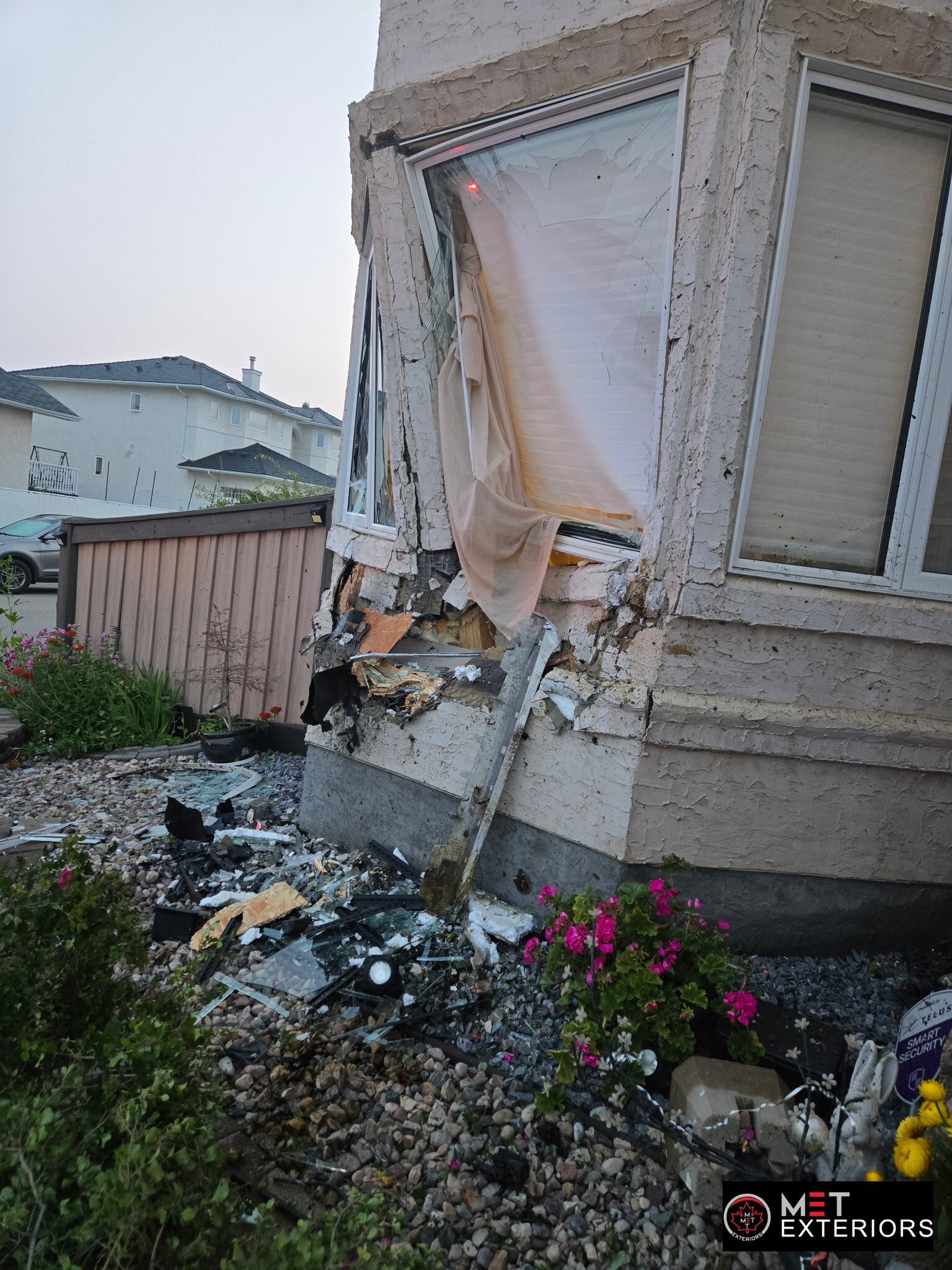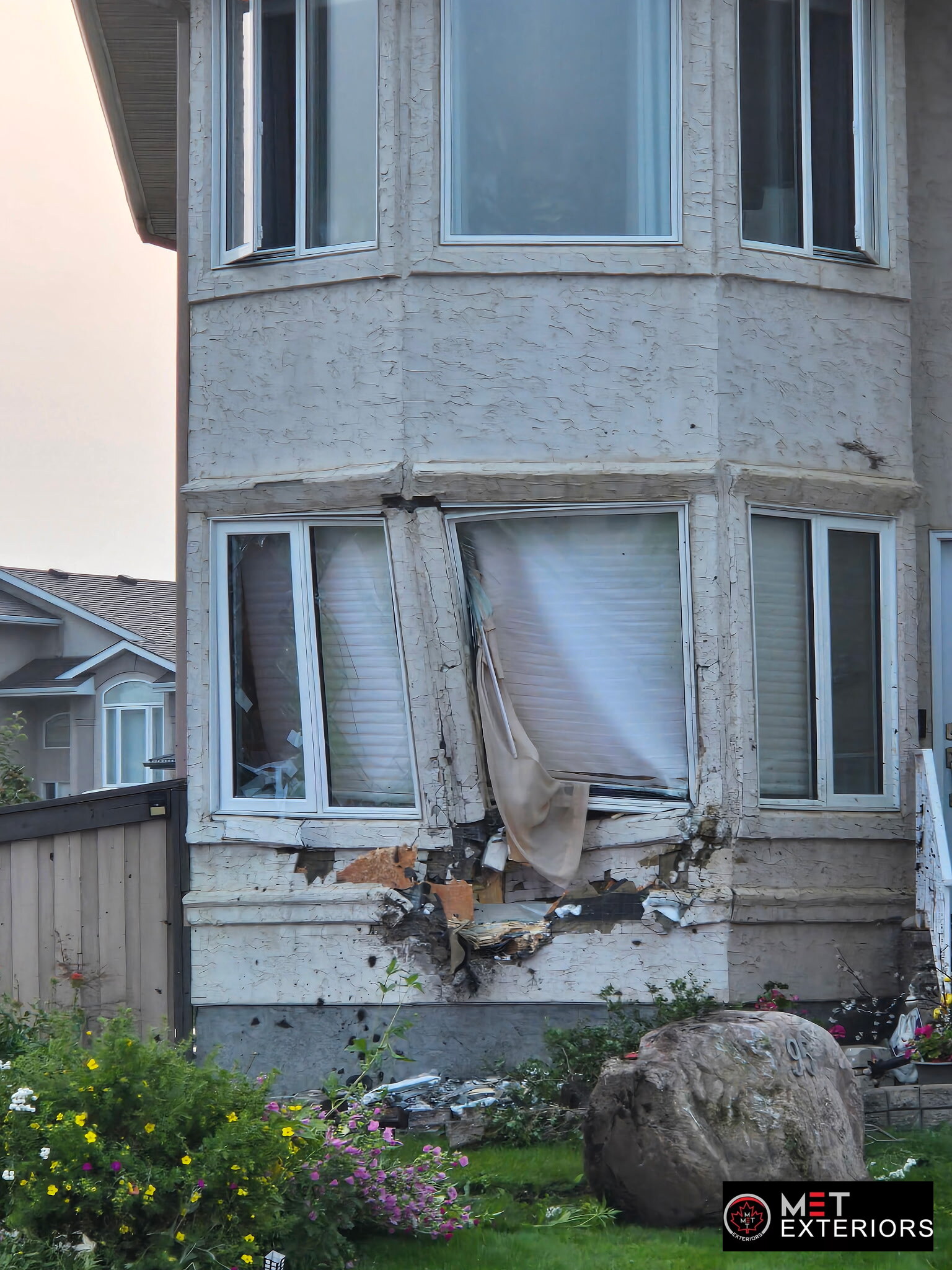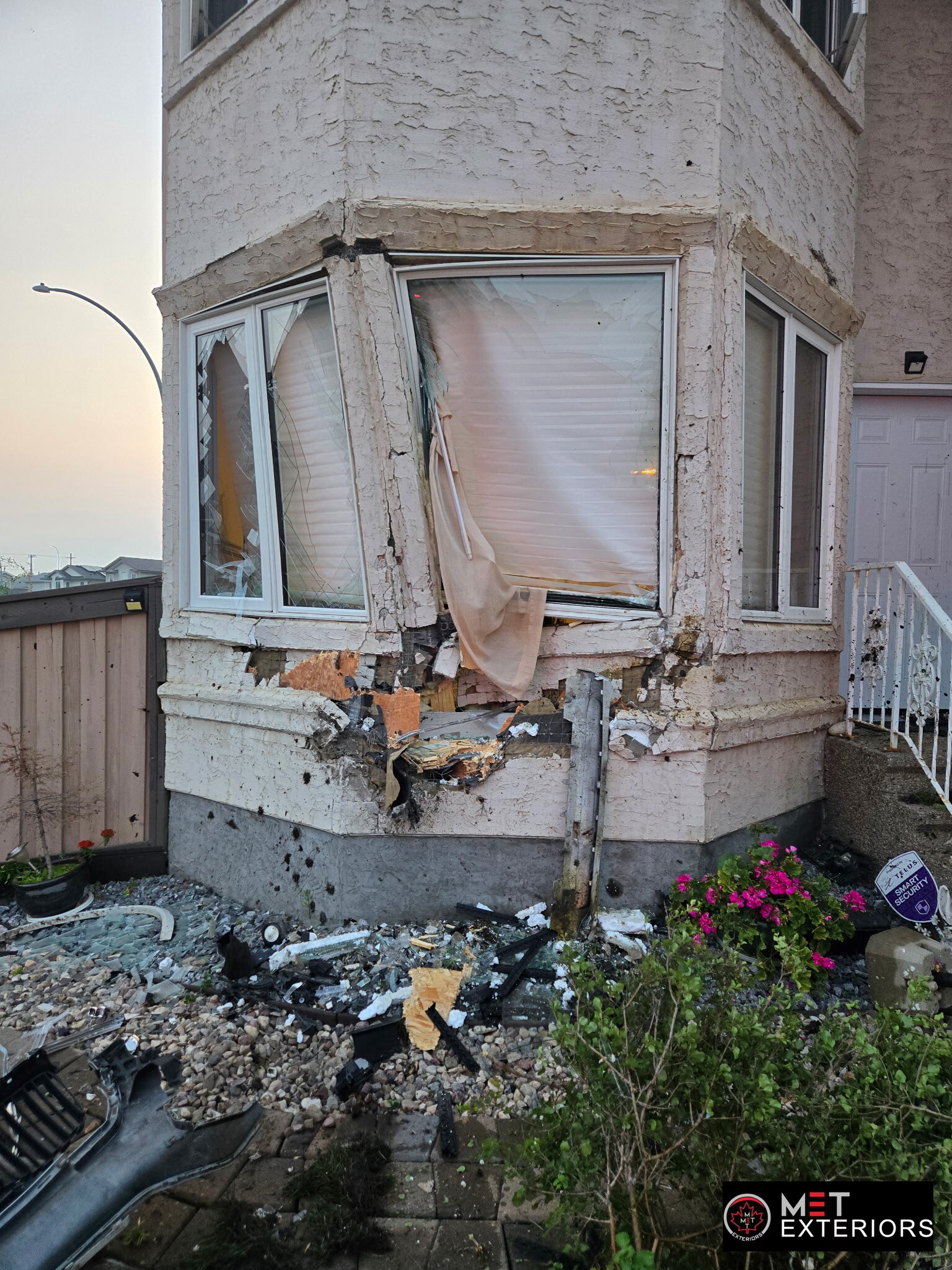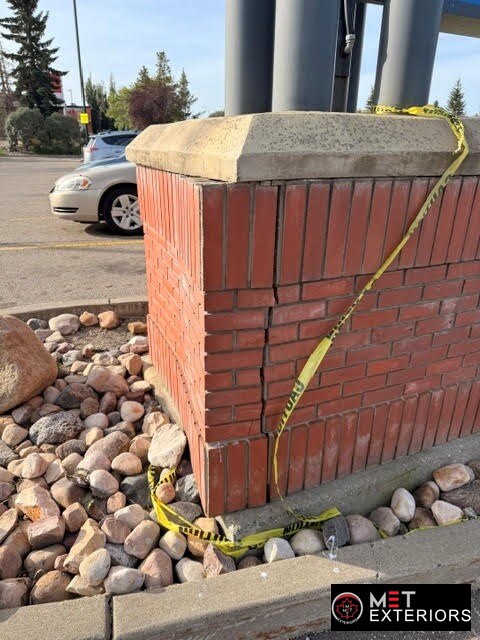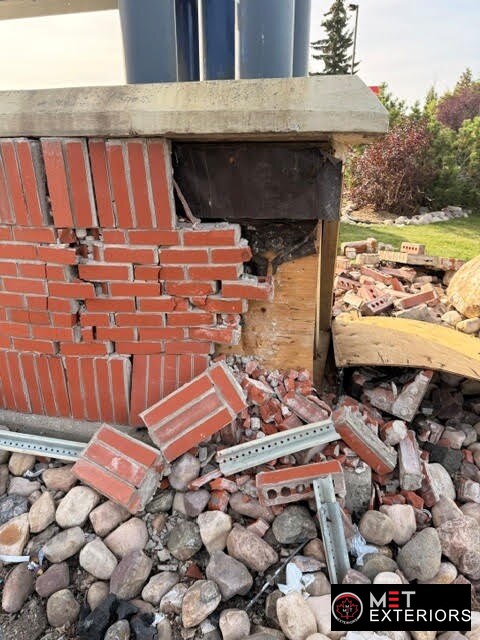
Vehicle impact damage can compromise much more than the visible brick, stucco or window. Met Exteriors provides vehicle impact damage repair in Edmonton and across Alberta, including emergency stabilization, detailed exterior assessments and complete restoration for residential and commercial insurance claims.
A wall struck by a vehicle should be treated as a building-envelope and structural concern until the full extent of the damage has been documented. Loose masonry, broken glass, displaced framing and exposed wall assemblies may create immediate safety and weather risks.
Vehicle impact damage is rarely only cosmetic
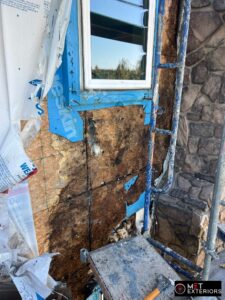
The point of impact may show broken brick, cracked stucco or damaged siding, but the force can transfer into concealed components. Sheathing, wood or steel framing, insulation, air and moisture barriers, flashings, fasteners and window assemblies may also be affected.
Repairs should not begin with a surface patch. The damaged area must first be made safe and examined so the repair scope addresses both the visible finish and the concealed wall assembly.
Common exterior damage after a vehicle collision
- Cracked, displaced or collapsed brick masonry
- Broken manufactured-stone veneer and mortar joints
- Damaged concrete or precast caps
- Cracked conventional stucco or EIFS
- Broken windows, frames and perimeter flashings
- Deteriorated or fractured wall sheathing
- Displaced wood or steel framing
- Torn air barriers and water-resistive membranes
- Damaged insulation, flashings and drainage components
- Compromised signage bases, columns and exterior features
Immediate safety and emergency stabilization
The first priority is protecting people and the property. The area may need barricades, temporary shoring, removal of unstable masonry, weather protection, board-up work or temporary enclosure. Utilities and concealed services near the impact zone should also be considered before demolition proceeds.
Where structural movement is suspected, a qualified engineer should establish the required assessment and repair criteria. Met Exteriors can coordinate its exterior restoration scope with the owner, insurer, adjuster, restoration contractor and project consultants.
Documenting vehicle damage for an insurance claim
Clear documentation helps all authorized parties understand the loss. Before damaged materials are removed, the condition should be photographed from multiple distances and angles. Measurements, affected materials, safety concerns, temporary work and visible concealed conditions should be recorded.
Additional deterioration discovered after authorized removal should be documented before reconstruction. Emergency work, investigation, approved repairs, code-related requirements and owner-requested improvements should be separated where practical. Insurance coverage and authorization remain the responsibility of the insurer and other authorized claim professionals.
Brick and masonry impact repairs
A masonry repair may require more than replacing the visibly broken units. The contractor should assess adjacent cracking, displaced backup materials, anchorage, reinforcement, flashings, drainage, caps and supporting construction. Salvageable units may be reused when appropriate, or replacement brick may need to be carefully matched for size, colour, texture and bond pattern.
For damaged masonry signs or columns, the internal support and attachment conditions should be reviewed before reconstruction. Learn more about Met Exteriors’ masonry services in Edmonton.
Stucco, EIFS and window impact repairs
Vehicle impacts involving stucco walls and bay windows can affect multiple layers at once. Glass and window frames may be damaged along with sheathing, framing, insulation, membranes, lath, basecoat, mesh and finish materials.
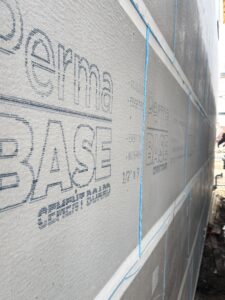
A durable restoration reconnects the air and moisture barrier, restores damaged substrates, integrates window perimeter flashings and rebuilds the cladding with compatible materials. Simply filling cracks or applying a new finish can conceal unresolved damage.
Our vehicle impact restoration process
- Secure the area and identify immediate hazards.
- Photograph and measure visible impact damage.
- Complete authorized selective demolition and investigation.
- Coordinate engineering or consultant requirements where needed.
- Prepare a detailed repair scope and restoration estimate.
- Document newly discovered conditions and obtain authorization.
- Restore substrates, membranes, flashings and exterior finishes.
- Provide completion records and applicable workmanship warranty.
Exterior restoration should follow approved drawings, applicable manufacturer instructions and the requirements of the National Building Code – 2023 Alberta Edition. The National Research Council Canada also provides guidance related to resilient building construction.
Frequently asked questions
Who repairs a building after a vehicle impact?
A qualified restoration team may include an exterior contractor, general contractor, engineer, window supplier and other specialists, depending on the damaged systems.
Can the damage extend beyond the visible impact area?
Yes. Impact forces can affect adjoining masonry, framing, windows, sheathing and membranes. Controlled investigation may be necessary to confirm the full scope.
Can Met Exteriors work with insurance companies and adjusters?
Yes. Met Exteriors can provide exterior trade assessments, estimates, photographs, progress documentation and approved restoration work while leaving policy and coverage decisions to the insurer.
Vehicle impact damage repair in Edmonton and Alberta
Met Exteriors restores brick, stone, stucco, EIFS, James Hardie, metal cladding and related building-envelope components damaged by vehicle impacts.
For an active loss, send the property location, photographs, available reports and required response time through our contact page. You can also review our information about insurance claims and exterior cladding failures and exterior restoration services.
This article provides general construction information and is not an engineering opinion, a coverage determination or a substitute for a project-specific investigation.