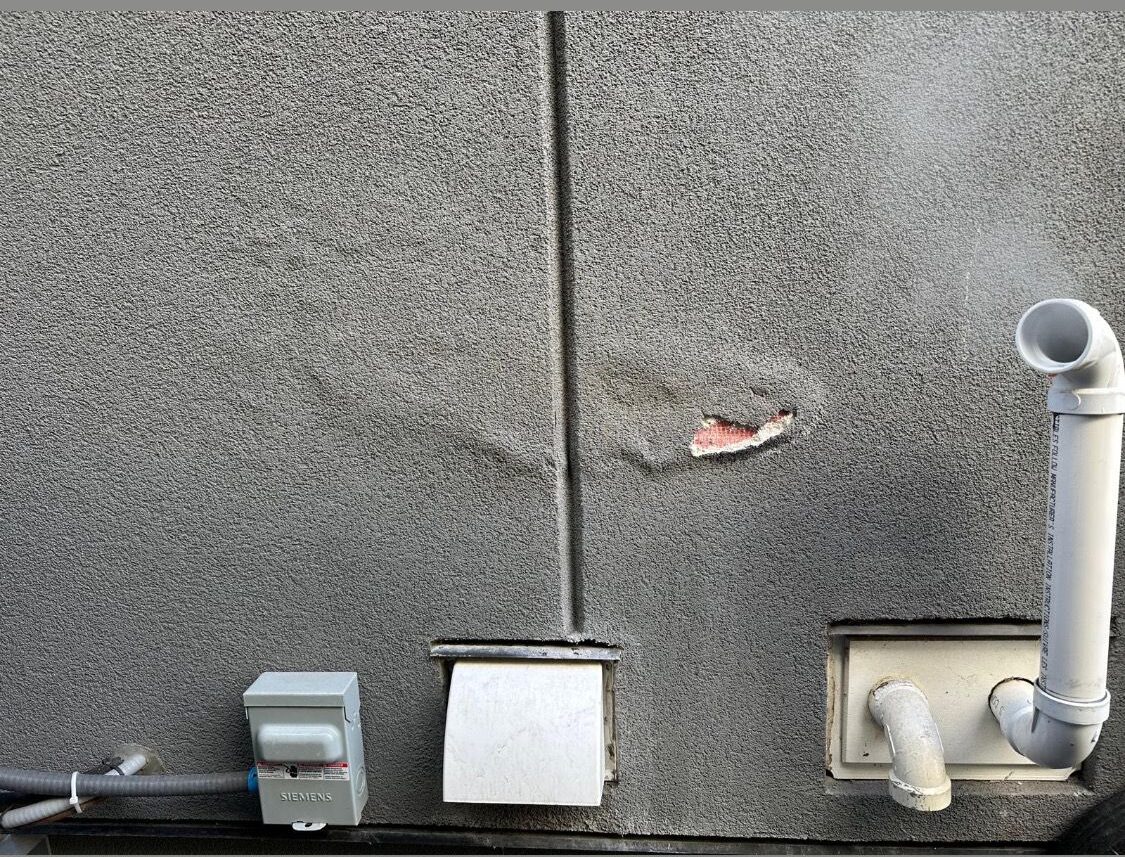
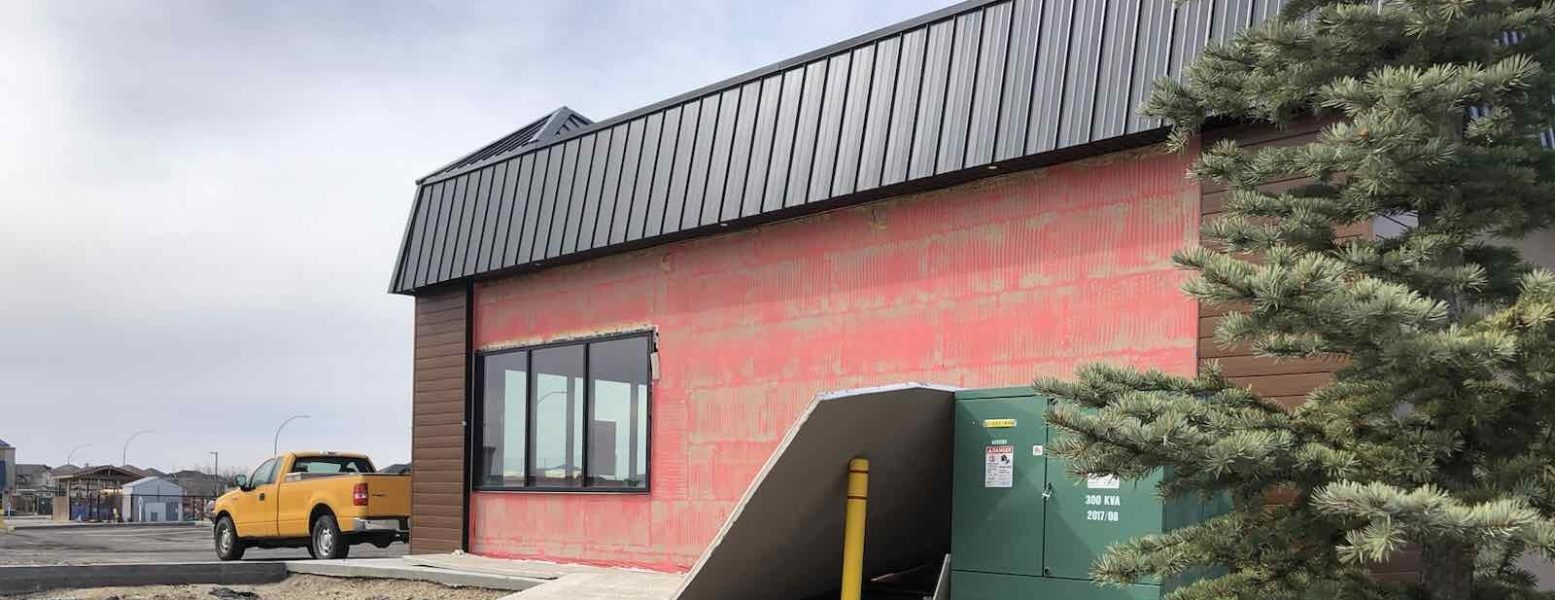
If you are considering an Edmonton home or commercial property with EIFS cladding, a specialized exterior inspection can help identify visible warning signs, maintenance needs and areas that may require further testing before you remove purchase conditions.
An EIFS inspection is not a guarantee that every concealed defect will be found. The most useful inspection clearly separates visible observations from conclusions that require moisture testing, controlled water testing, selective removal or engineering review.
What Is EIFS Cladding?
Exterior insulation and finish systems (EIFS) generally combine exterior insulation, a reinforced basecoat and a textured finish. Depending on the system and age of the building, the assembly may also include an air/moisture-control layer and drainage provisions.
EIFS can provide continuous exterior insulation and flexible architectural finishes. Its performance depends on the complete wall assembly, particularly details at windows, doors, decks, roofs, wall bases, penetrations and transitions to other cladding materials.
Why Arrange an Inspection Before Buying?
Many important exterior conditions are difficult to evaluate during a standard property viewing. Cracks, staining or failed sealants may be visible, while wet insulation, deteriorated sheathing or incomplete flashing can remain concealed.
A pre-purchase exterior inspection can help a buyer:
- Understand the visible condition of the EIFS and adjacent materials.
- Identify areas that need maintenance, repair or closer investigation.
- Ask the seller for relevant construction and repair records.
- Estimate whether immediate exterior work should be considered in the purchase decision.
- Determine whether a specialist, engineer or intrusive investigation is warranted.
What the Inspection Reviews
| Area | Visible concerns | Possible next step |
|---|---|---|
| EIFS finish and reinforced layer | Cracks, impact damage, bulging, staining, patches or hollow areas | Sounding, probing, adhesion review or selective removal |
| Windows and doors | Failed sealants, missing head flashing, poor sill drainage or tight terminations | Detail review, controlled water testing or localized opening |
| Roof and wall intersections | Missing kick-out flashing, vulnerable terminations or staining | Coordinate roofing and wall-envelope repairs |
| Decks, balconies and canopies | Cladding penetrations, cap flashing, membrane transitions or trapped water | Further review by the appropriate trade or design professional |
| Wall bases | Low clearance, damaged termination, blocked drainage or snow exposure | Correct grade, drainage or termination details |
| Sealant joints and penetrations | Cracking, debonding, missing backer material or incompatible repairs | Remove and replace using approved joint details |
| Interior warning signs | Staining, musty odours or damaged finishes near exterior transitions | Coordinate exterior testing and qualified interior assessment |
Inspection Levels and Their Limitations
Visual exterior inspection
A visual inspection documents accessible surfaces and details. It can identify symptoms and risk areas, but it cannot confirm the condition of concealed sheathing, framing or insulation.
Non-invasive moisture screening
Moisture meters and thermal imaging may help compare suspect and reference areas under suitable conditions. These tools provide screening information; readings can be affected by materials, temperature, weather and wall configuration. They do not independently prove the source or full extent of concealed damage.
Controlled water testing
Where a specific opening or transition is suspected, controlled testing can help reproduce leakage under an agreed procedure. Testing should be planned carefully to avoid uncontrolled water entry and interpreted with the wall assembly in mind.
Selective removal or intrusive testing
Small openings may be needed to directly inspect concealed materials. This requires the owner’s authorization and a plan for temporary protection and permanent repair.
Engineering or specialist review
Structural deterioration, widespread movement, complex commercial façades or disputed causation may require review by a qualified engineer or building-envelope professional.
Important Inspection Limitations
- Only accessible and visible areas can be reviewed unless additional access is arranged.
- Snow, rain, wind, temperature and wet surfaces may limit testing.
- High elevations may require lifts, scaffolding, drone review or other access methods.
- Furniture, finishes and occupied areas may prevent interior observations.
- Concealed damage cannot be ruled out without appropriate investigation.
- An exterior-cladding inspection is not a complete home inspection, code-compliance certification or structural engineering report.
- The findings represent conditions observed on the inspection date.
Questions to Ask the Seller
- When was the EIFS installed, and which manufacturer or contractor completed it?
- Are drawings, permits, warranties or product records available?
- Have there been leaks, insurance claims, mould concerns or interior repairs?
- Were windows, roofs, decks or exterior sealants recently replaced?
- Have previous EIFS repairs been completed, and are invoices or photographs available?
- Has any moisture testing, water testing or engineering review been performed?
Documents do not replace an inspection, but they can help explain repairs, system age and known problem areas.
Warning Signs Buyers Should Not Ignore
- Cracks radiating from window or door corners.
- Staining below sills, rooflines, decks or parapets.
- Bulging, soft, loose or hollow-sounding areas.
- Open joints or sealant bonded directly to failing finish.
- EIFS installed too close to grade, roofing or horizontal surfaces.
- Repeated patches with different colours or textures.
- Musty interior odours or damaged finishes near exterior openings.
- Missing or questionable flashing at roof-to-wall intersections.
One symptom does not automatically prove concealed damage. The pattern, wall details and testing results must be considered together.
What the Buyer Receives
The agreed inspection scope may include photographs, observations, priority items and recommendations for maintenance, repair or additional investigation. Testing, lift access, destructive openings, laboratory analysis and engineering are separate services unless specifically included.
Met Exteriors charges for professional assessments according to the property, access requirements and requested reporting. The scope and applicable fee should be confirmed before the inspection.
Frequently Asked Questions
Can an EIFS inspection find all hidden moisture?
No. A visual inspection and non-invasive screening can identify warning signs and suspect areas, but concealed conditions may require controlled testing or selective removal.
Is this the same as a general home inspection?
No. This is a specialized review of the exterior cladding and accessible building-envelope details. Buyers should still obtain any general home inspection, roofing, structural or mechanical assessments appropriate to the purchase.
Should the inspection occur before removing purchase conditions?
When possible, complete the inspection early enough to review the findings and request any further testing before contractual deadlines.
Does every crack mean the EIFS has failed?
No. Cracks vary in significance. Their location, width, pattern, movement, surrounding details and evidence of moisture determine the appropriate response.
Can Met Exteriors provide repair pricing after the inspection?
Where the cause and scope are sufficiently clear, repair options may be discussed. Concealed damage may require investigation before a reliable repair scope or price can be prepared.
Pre-Purchase EIFS Inspections in Edmonton
Met Exteriors provides specialized exterior-cladding inspections for buyers, owners and property managers in Edmonton and surrounding Alberta communities. The service focuses on EIFS, stucco, masonry, stone, siding, flashings, sealants and visible building-envelope transitions.
Learn more about our main exterior inspection service, EIFS installation and repair services, EIFS problems and solutions guide and cladding-failure documentation.
For general EIFS standards and technical references, visit the EIFS Industry Members Association.
Contact Met Exteriors with the property address, purchase timeline, available listing photographs and requested inspection scope.
Inspection Videos
Inspection Photographs