Last updated October 24, 2026
Exterior Insulation and Finish Systems (EIFS) can provide continuous insulation, design flexibility and a durable finished exterior when the complete wall assembly is properly designed, detailed, installed and maintained. Met Exteriors works with residential, commercial and multi-family EIFS systems in Edmonton and across Alberta, including new installations, inspections, repairs, restoration and replacement.
Alberta’s freeze-thaw cycles, wind-driven precipitation and large seasonal temperature changes make proper moisture management, flashing, drainage and sealant details especially important. An EIFS problem should be evaluated as part of the complete exterior wall assembly rather than assuming the finish material alone is responsible.
Common Causes of EIFS Problems in Alberta
EIFS problems can result from installation deficiencies, design or detailing issues, failed sealants, damaged or missing flashing, penetrations, impact damage, moisture intrusion, substrate deterioration or deferred maintenance.
- Missing or incorrectly integrated window, door and roof-to-wall flashing
- Failed sealant joints around openings and penetrations
- Improper drainage or termination details
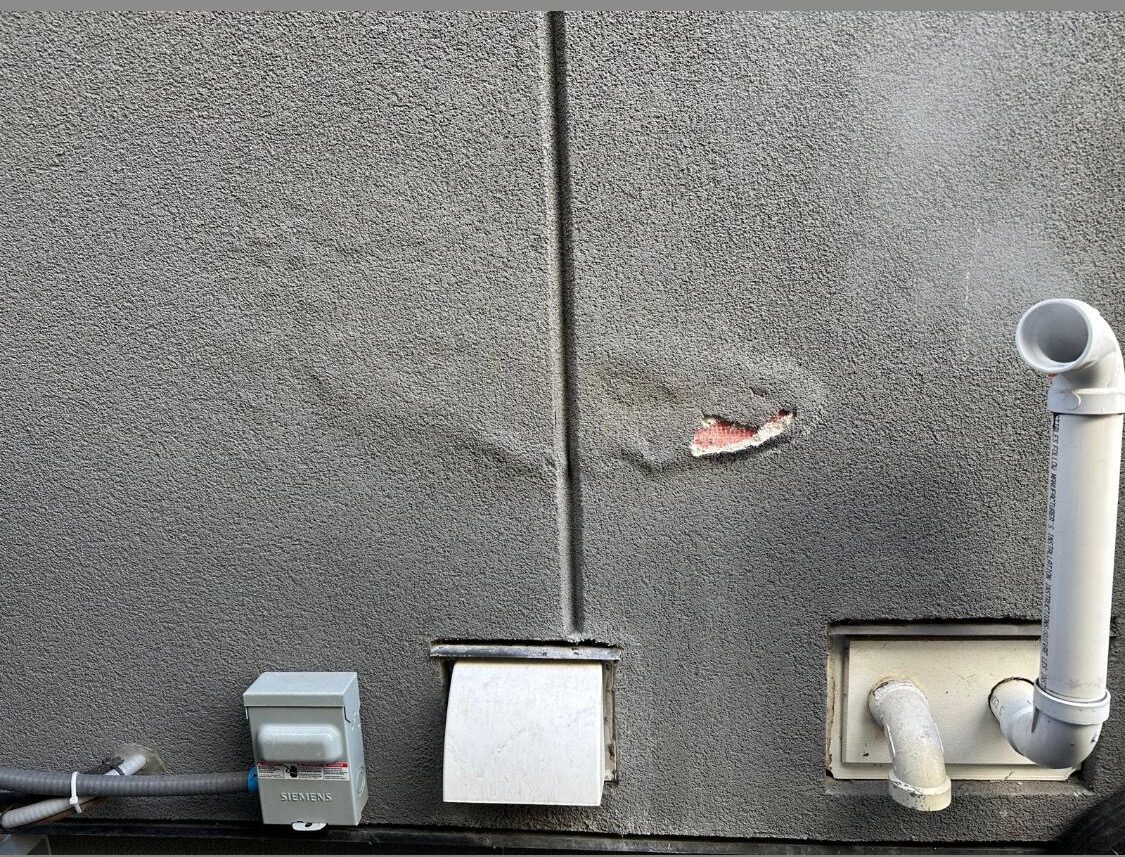
- Cracked, punctured or impact-damaged EIFS lamina
- Incompatible materials or repairs
- Installation that does not follow the specified EIFS manufacturer’s requirements
- Moisture entering from adjacent building components
Signs an EIFS Exterior Should Be Investigated
Visible staining, cracking, bulging, soft areas, damaged sealant, open joints, deteriorated terminations or recurring moisture around windows and doors can indicate that further investigation is appropriate. Some problems are localized, while others may involve concealed components of the wall assembly. The table below shows common signs, what may be behind them and a sensible next step. It is a guide, not a diagnosis.
| What you see | What may be causing it | Typical next step |
|---|---|---|
| Cracks around windows and doors | Movement at openings, failed sealant, or missing or incorrect flashing and backer rod | Inspect the joint and flashing details and check for moisture before re-sealing |
| Staining or streaking below openings or roof edges | Water running behind or over the system at a transition | Trace the water path and check flashing, kick-outs and drainage |
| Soft or spongy areas | Moisture in the insulation or substrate behind the finish | Moisture investigation and selective opening where appropriate |
| Bulging or loose finish | Water behind the lamina or an adhesion problem | Assess the extent and define a repair scope |
| Punctures or impact damage | Vehicles, equipment or flying debris | Repair with compatible materials and check for water entry |
| Open or cracked sealant joints | Aged or incompatible sealant, or joint movement | Replace the joint properly rather than adding more sealant over it |
Depending on the condition and project requirements, an assessment may include visual review, examination of transitions and penetrations, moisture-related investigation or selective openings where appropriate. The objective is to understand the likely source and extent of the problem before recommending repair or replacement. Many EIFS failures begin where materials meet. See our article on building envelope transition failures in Edmonton.
EIFS Repair, Restoration or Replacement?
Not every exterior cladding problem requires complete removal. Localized damage may sometimes be repaired when the surrounding assembly remains serviceable and the source of moisture or deterioration can be corrected. More extensive restoration or replacement may be appropriate where damage is widespread, drainage and flashing details are deficient, or concealed materials have deteriorated.
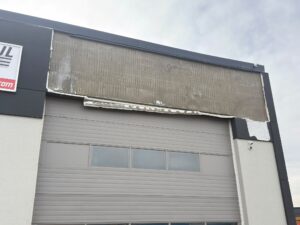
Met Exteriors evaluates the visible conditions and project scope before recommending an approach. Repairs should address the cause of the problem as well as the damaged finish so the same condition is less likely to return. For an example of wind-related failure, read EIFS wall blown away by strong winds.
EIFS Inspections for Homes and Commercial Buildings
Early exterior assessment can help property owners, condominium boards, property managers and building owners identify developing issues before planning repairs. Met Exteriors provides specialized residential exterior inspections and commercial exterior inspections in Edmonton and across Alberta. You can also read about what an EIFS inspection in Edmonton involves.
Proper EIFS Installation Matters
Long-term EIFS performance depends on the complete assembly: substrate preparation, air and moisture control, insulation, reinforcement, base coat, finish, drainage, flashing, sealants, penetrations and transitions to adjacent materials. Installation requirements vary by manufacturer and wall design, so the specified system details should be followed for each project.
Learn more about our EIFS cladding and installation services and our commercial exterior cladding services. For additional information about exterior insulation systems, installation standards and industry best practices, visit the EIFS Council of Canada.
Maintenance Checklist for Alberta Property Owners
Snow, rain, freezing temperatures and strong winds gradually affect exterior finishes and building-envelope components. Small problems become more expensive when water enters concealed wall areas and reaches insulation or sheathing. Check these items regularly:
- Cracks, punctures or impact damage in the finish
- Damaged or missing sealant around windows, doors and penetrations
- Moisture stains or algae below openings, roof edges and balconies
- Separation or movement around windows and doors
- Clear drainage paths and intact flashing
If you find any of these, a professional inspection can determine whether maintenance, localized repair or more extensive restoration is needed.
Frequently Asked Questions
Can EIFS be repaired, or does it have to be replaced?
Localized damage can often be repaired if the surrounding assembly is sound and the cause of the problem is corrected. Widespread moisture damage or deficient flashing and drainage may call for more extensive restoration or replacement. An assessment is needed to know which applies.
Does moisture damage always show on the outside?
No. Water can enter at a small opening and travel behind the finish before any stain or crack appears. That is why moisture-related investigation can be needed even when the surface looks acceptable.
Is EIFS a poor choice for Alberta?
EIFS performance depends on the design, detailing, installation and maintenance of the full assembly. Problems are most often linked to flashing, sealant, drainage and transition details rather than the finish alone.
When should I have my EIFS inspected?
Consider an inspection when you see cracking, staining, soft areas or damaged sealant, after an impact or severe weather, and before planning repairs or a property purchase.
Is your EIFS exterior showing cracks, stains or moisture concerns? Send us the property location and photos and we will review the condition and next steps.
EIFS Solutions from Met Exteriors
Met Exteriors provides EIFS installation, assessment, repair and exterior restoration services for residential, commercial and multi-family properties throughout Edmonton and Alberta. Our team focuses on identifying the exterior conditions, coordinating compatible materials and paying close attention to the flashing, drainage and transition details that affect long-term performance.
If your EIFS exterior has cracking, moisture concerns, damaged finishes or suspected installation problems, contact Met Exteriors to discuss an exterior assessment, repair or restoration project.