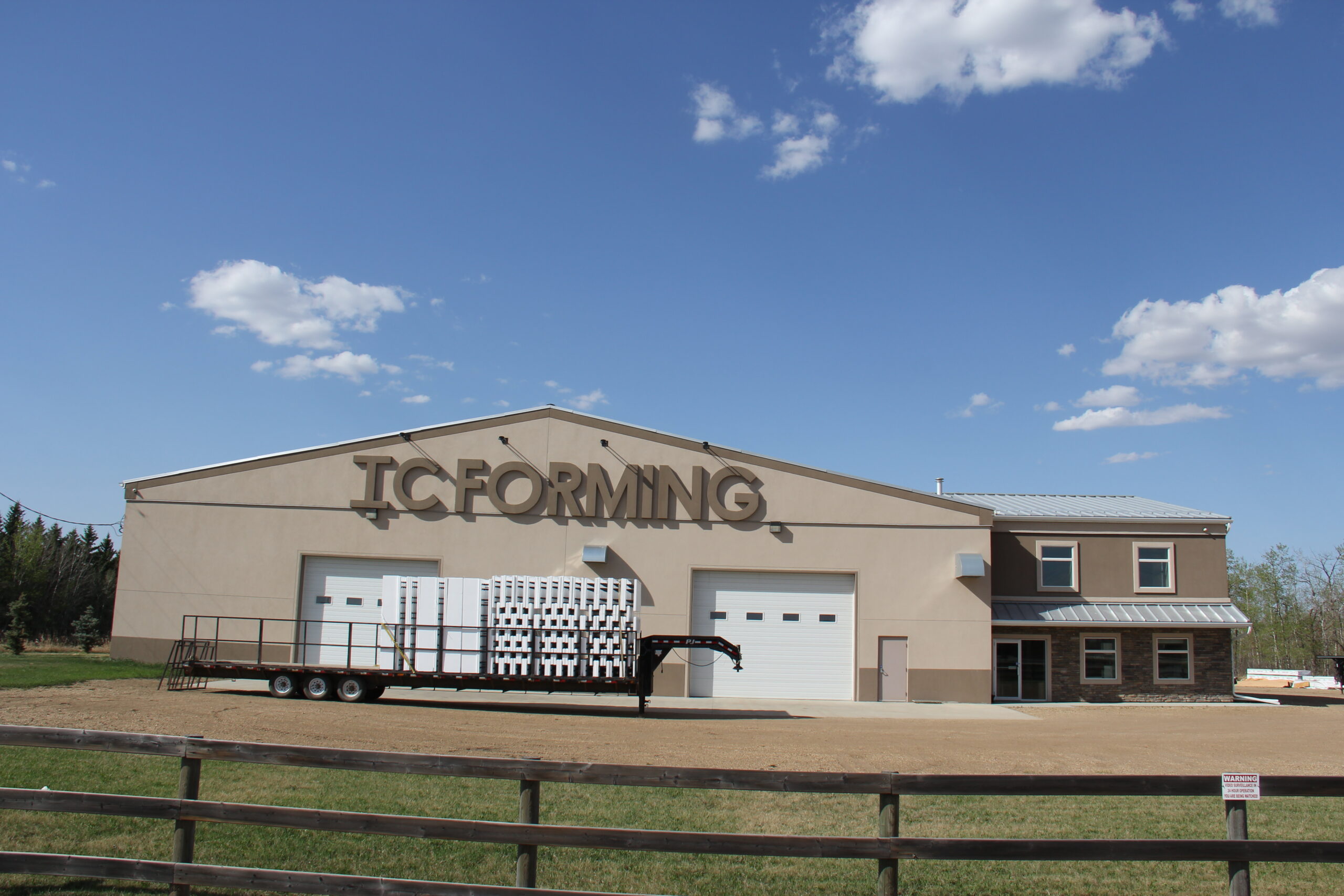
Insulated concrete form walls provide continuous foam insulation around a reinforced concrete core. Before an acrylic stucco or reinforced coating system is applied, the exposed ICF surface must be evaluated and prepared according to the ICF manufacturer, finish-system manufacturer and project specifications.
Surface preparation is not one universal step. The correct method depends on the age and condition of the foam, form alignment, exposed ties or webs, wall transitions, selected coating system and required attachment method.
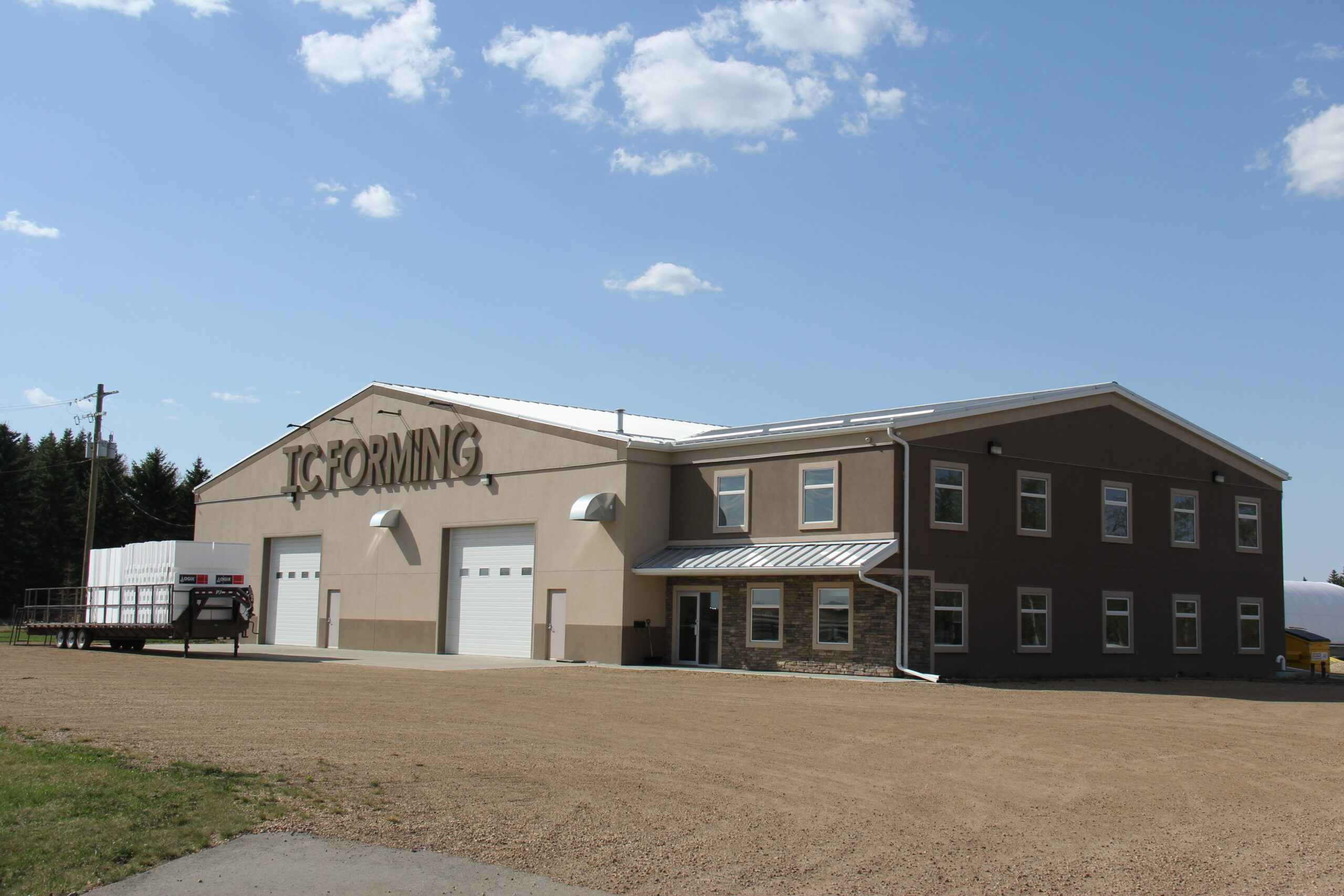
What Is an ICF Exterior Wall?
ICF construction uses hollow foam forms that remain in place after concrete is poured. The foam provides continuous insulation, while the reinforced concrete core provides the primary structural wall.
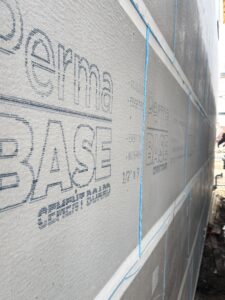
The exterior foam requires a compatible protective finish. Depending on the building design and approved system, options may include reinforced acrylic coatings, mechanically attached stucco, cement-board assemblies, adhered veneer or other exterior claddings.
The acrylic finish does not create the wall’s energy efficiency. Thermal performance comes primarily from the complete ICF wall assembly, continuity of insulation, openings, air leakage control and other building-envelope details.
Why ICF Surface Preparation Matters
A finish system needs a stable, clean and properly detailed surface. ICF walls can have raised form seams, foam damage, prolonged ultraviolet exposure, contaminants, irregular transitions and penetrations that must be addressed before coating begins.
| Existing condition | Why it matters | Possible preparation |
|---|---|---|
| Raised form seams or uneven foam | Irregularities may remain visible and create inconsistent coating thickness. | Level or rasp the surface where permitted by the approved system. |
| UV-degraded or oxidized foam | Weathered foam can become dusty or weakened at the surface. | Remove affected surface material and confirm sound foam remains. |
| Damaged or missing foam | Voids can interrupt the substrate and create uneven transitions. | Repair with compatible materials following the ICF manufacturer’s instructions. |
| Dirt, concrete residue or contaminants | Contamination may interfere with compatible coatings and repairs. | Clean the surface using an approved method without damaging the foam. |
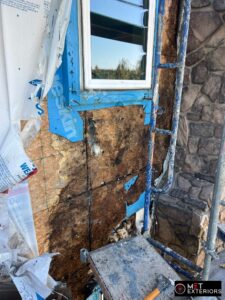
| Openings and service penetrations | These locations require water-management and movement details. | Install approved membranes, flashings, trims and sealant-joint preparations. |
When Rasping ICF Foam May Be Required
Rasping can help level ICF form seams, remove weathered foam and create a more uniform plane. However, it should not be described as mandatory for every product or every wall. Some finish systems rely on specific basecoats, reinforcing mesh, mechanical attachment or attachment to the ICF webs.
Before rasping:
- Confirm the selected finish system permits or requires it.
- Identify the location of ICF webs or ties.
- Check the foam for UV degradation, damage and contamination.
- Protect windows, membranes, wiring and exposed components.
- Avoid removing excessive foam or changing required clearances.
- Follow manufacturer guidance for dust removal and subsequent coating.
Rasping alone does not provide waterproofing, structural attachment or reinforcement. It is one possible preparation step within a complete approved assembly.
Protecting Exposed ICF Foam From Sunlight and Weather
ICF foam can deteriorate at the surface after prolonged ultraviolet exposure. The affected layer may become discoloured, powdery or less cohesive. Applying coatings over unsound foam without proper preparation can compromise the finish interface.
Exposure time alone does not determine the repair. The surface should be inspected, affected foam removed where required, damage repaired and the wall protected with the specified basecoat or exterior system within permitted weather conditions.
Typical Acrylic Stucco Components Over ICF
The exact assembly must follow approved project and manufacturer details, but a reinforced acrylic coating system may include:
- Inspection and preparation of the ICF foam surface.
- Repair of voids, damaged foam and irregular transitions.
- Membranes, flashings and accessories at openings and penetrations.
- Compatible basecoat applied at the specified thickness.
- Alkali-resistant reinforcing mesh embedded into the basecoat.
- Additional reinforcement at corners, openings and impact-prone areas where specified.
- Primer compatible with the selected finish.
- Acrylic finish applied in the approved colour and texture.
Fasteners, lath or attachment to ICF webs may be required for some systems. A direct-applied reinforced coating should not be substituted for a mechanically attached stucco assembly unless the selected system specifically permits it.
Critical Details Around Windows, Doors and Transitions
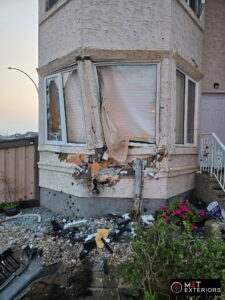
Most exterior failures occur at transitions rather than in the middle of an uninterrupted wall. ICF projects require careful coordination at:
- Window and door openings.
- Roof-to-wall intersections.
- Decks, balconies and canopies.
- Wall bases and changes in foundation exposure.
- Service penetrations and exterior fixtures.
- Transitions from ICF to framed walls.
- Connections between stucco, masonry, siding and metal cladding.
The exterior coating is not a substitute for properly integrated flashings, membranes and sealant joints. Water must be directed away from openings and vulnerable transitions using details appropriate to the wall assembly.
Cold-Weather and Edmonton Freeze-Thaw Considerations
Basecoats, primers, sealants and acrylic finishes have minimum application and curing temperatures. Temporary heat and enclosure may be required when work proceeds during cold weather. The substrate and surrounding air must remain within product requirements for the specified curing period.
Rain, frost, condensation and rapid temperature changes can affect curing and adhesion. Application should be delayed or protected when environmental conditions do not meet the manufacturer’s written requirements.
Common ICF Exterior Installation Mistakes
- Coating UV-damaged or contaminated foam without preparation.
- Failing to level major form seams and irregularities.
- Using products that are incompatible with the ICF foam.
- Omitting reinforcing mesh or required additional reinforcement.
- Ignoring attachment requirements at webs or ties.
- Poor detailing at windows, doors and material transitions.
- Applying materials outside approved temperature conditions.
- Assuming the finish coat provides the complete water-management system.
- Mixing components from different systems without written approval.
Frequently Asked Questions
Does every ICF wall need to be rasped before acrylic stucco?
No. Rasping requirements depend on the ICF condition and the approved finish system. It may be used to level seams or remove degraded foam, but the manufacturer’s instructions govern the preparation.
Can acrylic stucco be applied directly to ICF foam?
Some approved reinforced coating systems are designed for application over prepared ICF foam. Other systems require mechanical attachment, lath, cement board or attachment to ICF webs. Confirm the specified assembly before installation.
Does acrylic stucco waterproof an ICF wall?
No exterior finish should be treated as the only water-control layer. Openings, transitions, flashings, membranes and sealant joints must be designed to manage water as part of the complete wall.
How does UV exposure affect ICF foam?
Prolonged sunlight can degrade the surface and make it powdery or less cohesive. The affected material should be evaluated and removed or repaired as required before the finish system is installed.
Can ICF stucco be installed during winter?
Cold-weather installation may be possible with suitable enclosure, heat and monitoring. All materials and substrates must remain within the manufacturer’s application and curing requirements.
ICF Exterior Finishes in Edmonton and Alberta
Met Exteriors installs and repairs exterior finish systems for ICF homes, commercial buildings and multi-family properties in Edmonton and surrounding Alberta communities. Our scope can include surface preparation, reinforcement, basecoat, acrylic finishes, opening details and coordination with adjacent cladding systems.
Learn more about our ICF exterior finishing services, reinforced EIFS systems and cement-board stucco systems. If an existing finish is cracked, loose or showing moisture-related symptoms, consider an exterior building-envelope inspection.
For ICF industry information, visit the Insulated Concrete Forms Manufacturers Association. To discuss an ICF exterior project, contact Met Exteriors or call 780-756-2428.