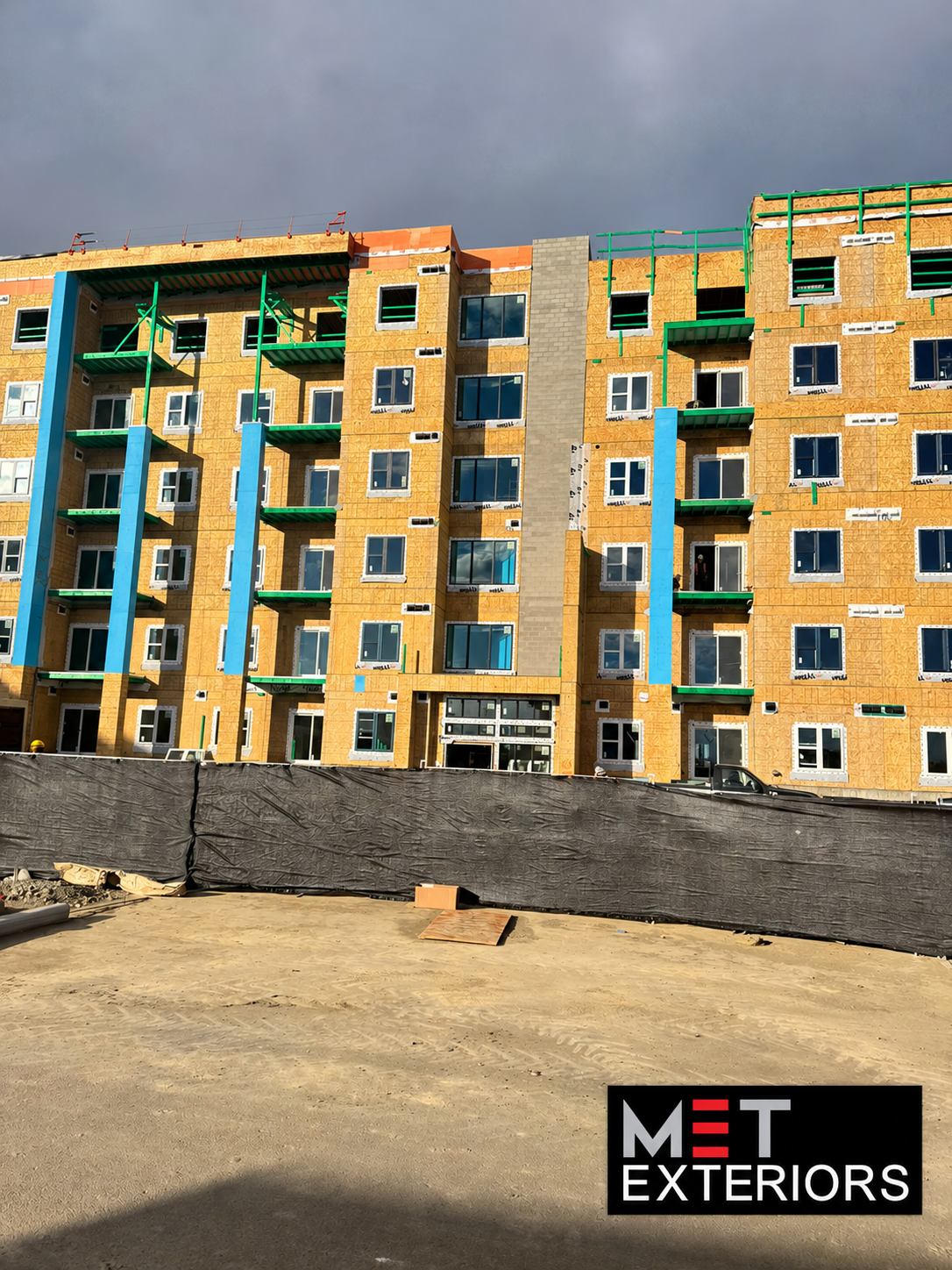
CMU Elevator Shaft Construction in Edmonton
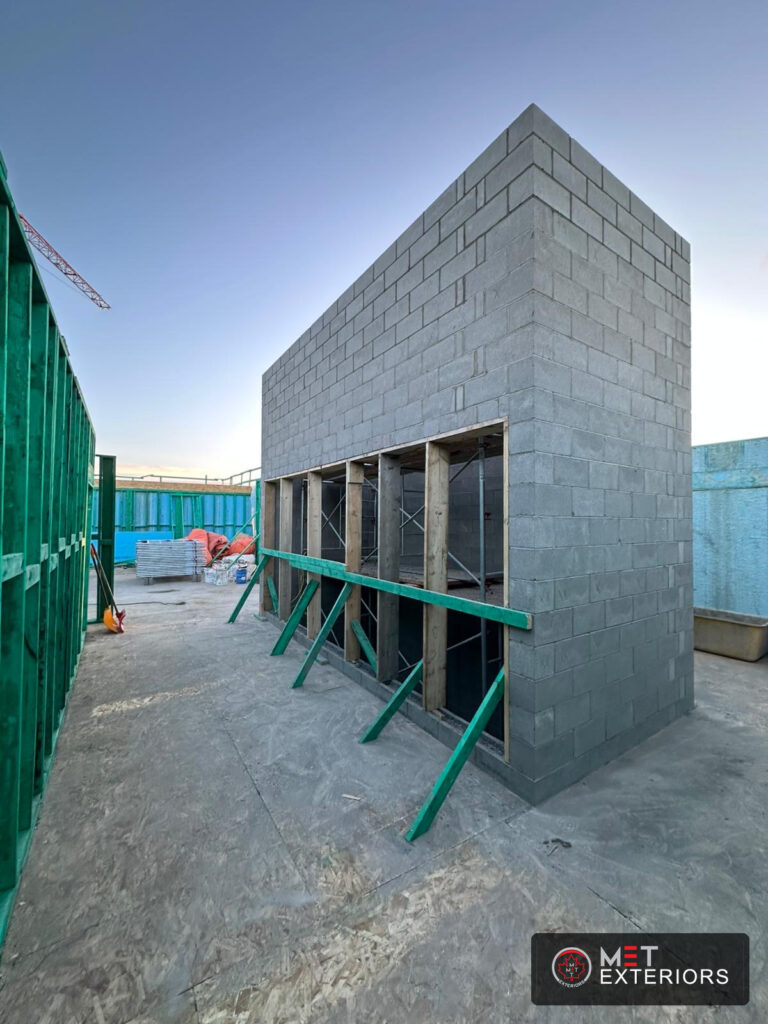
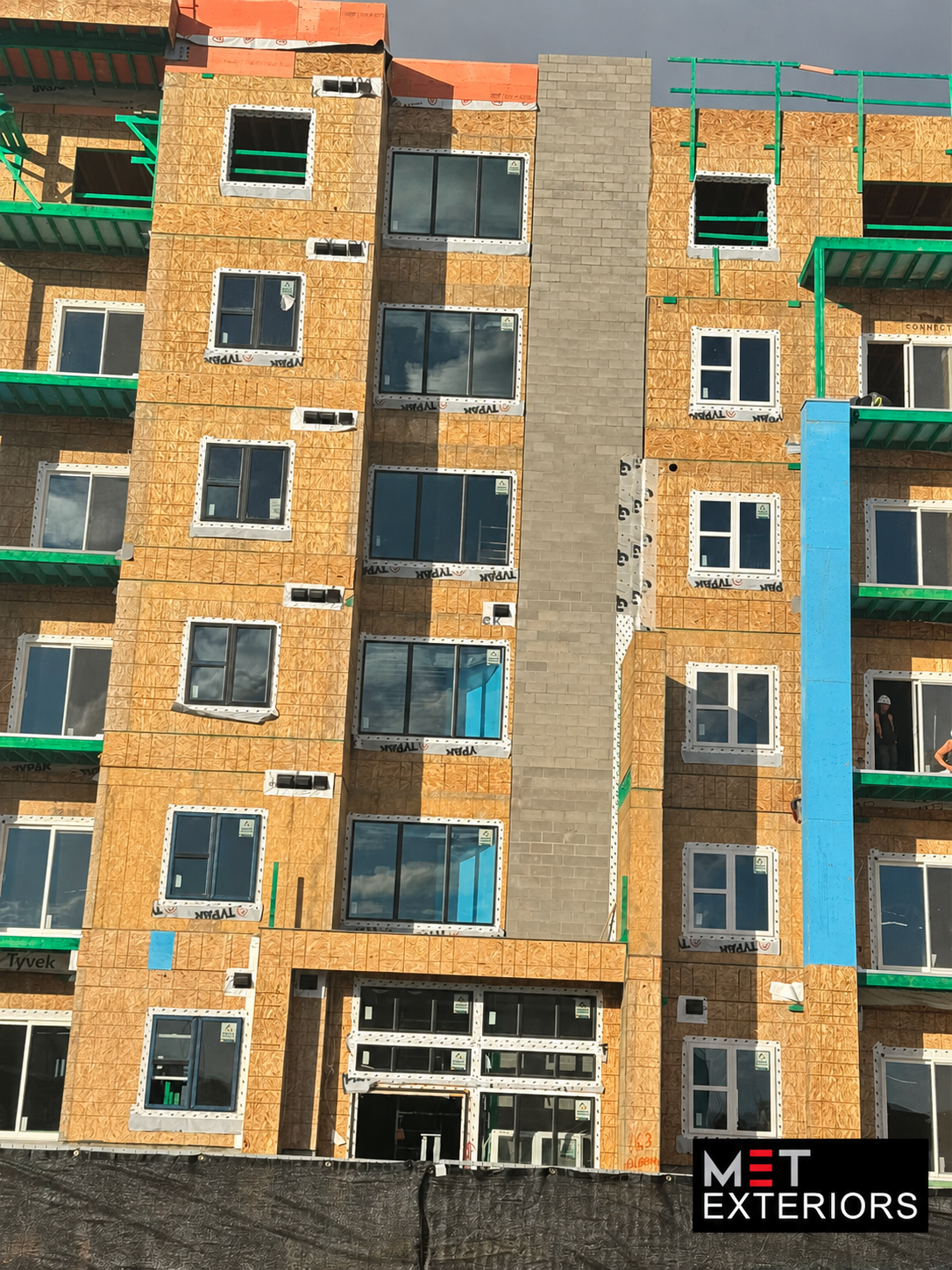
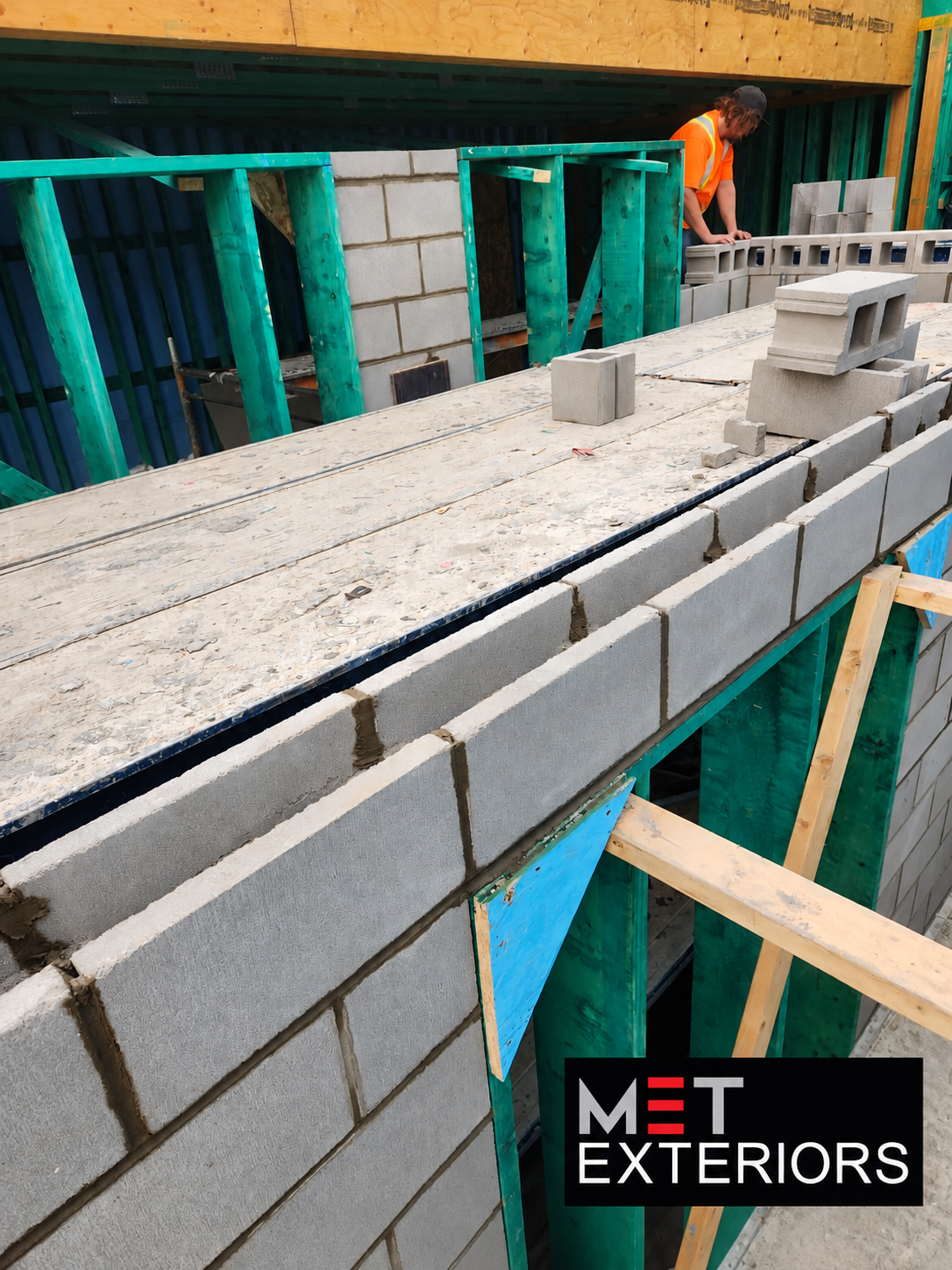
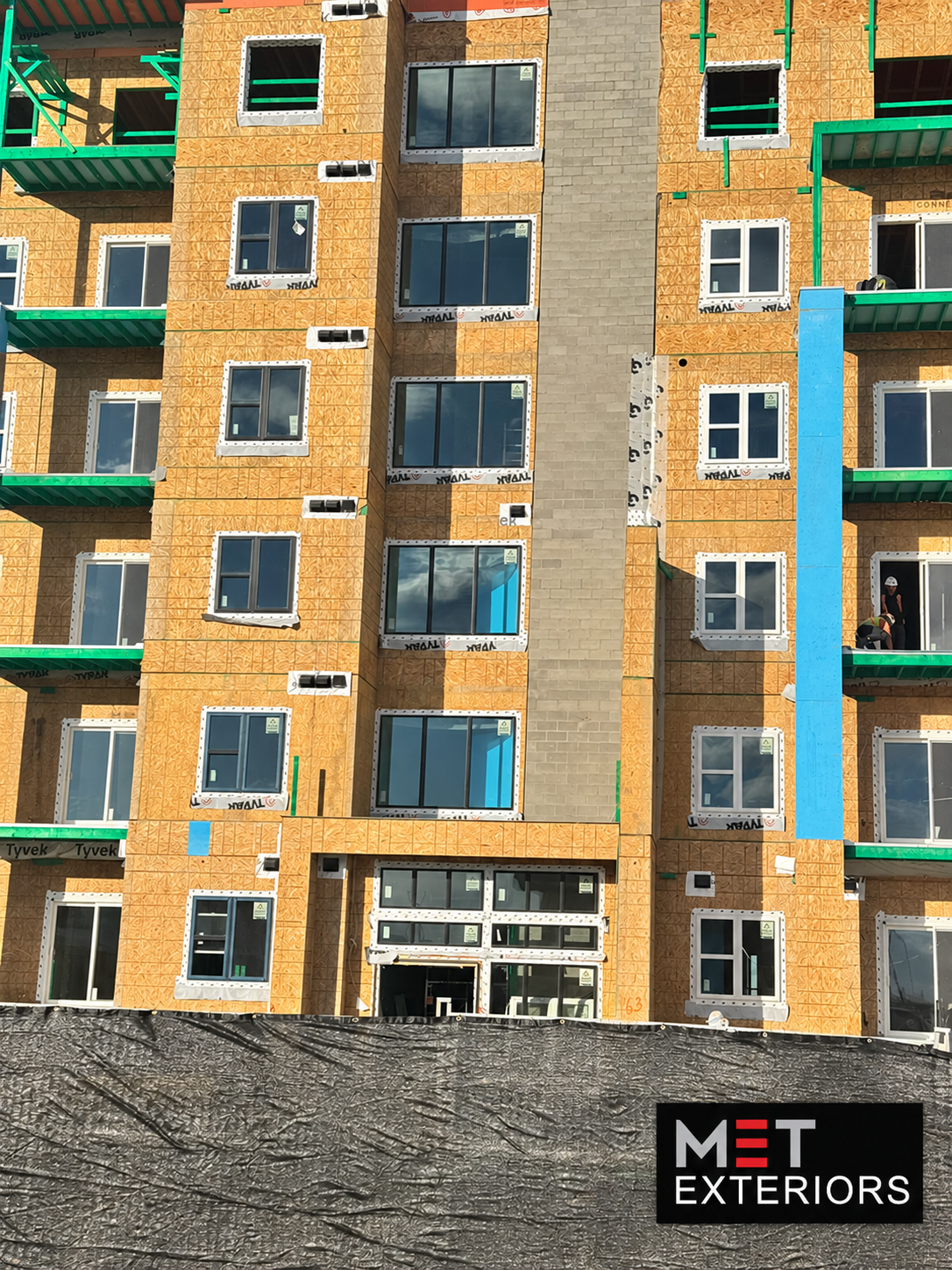
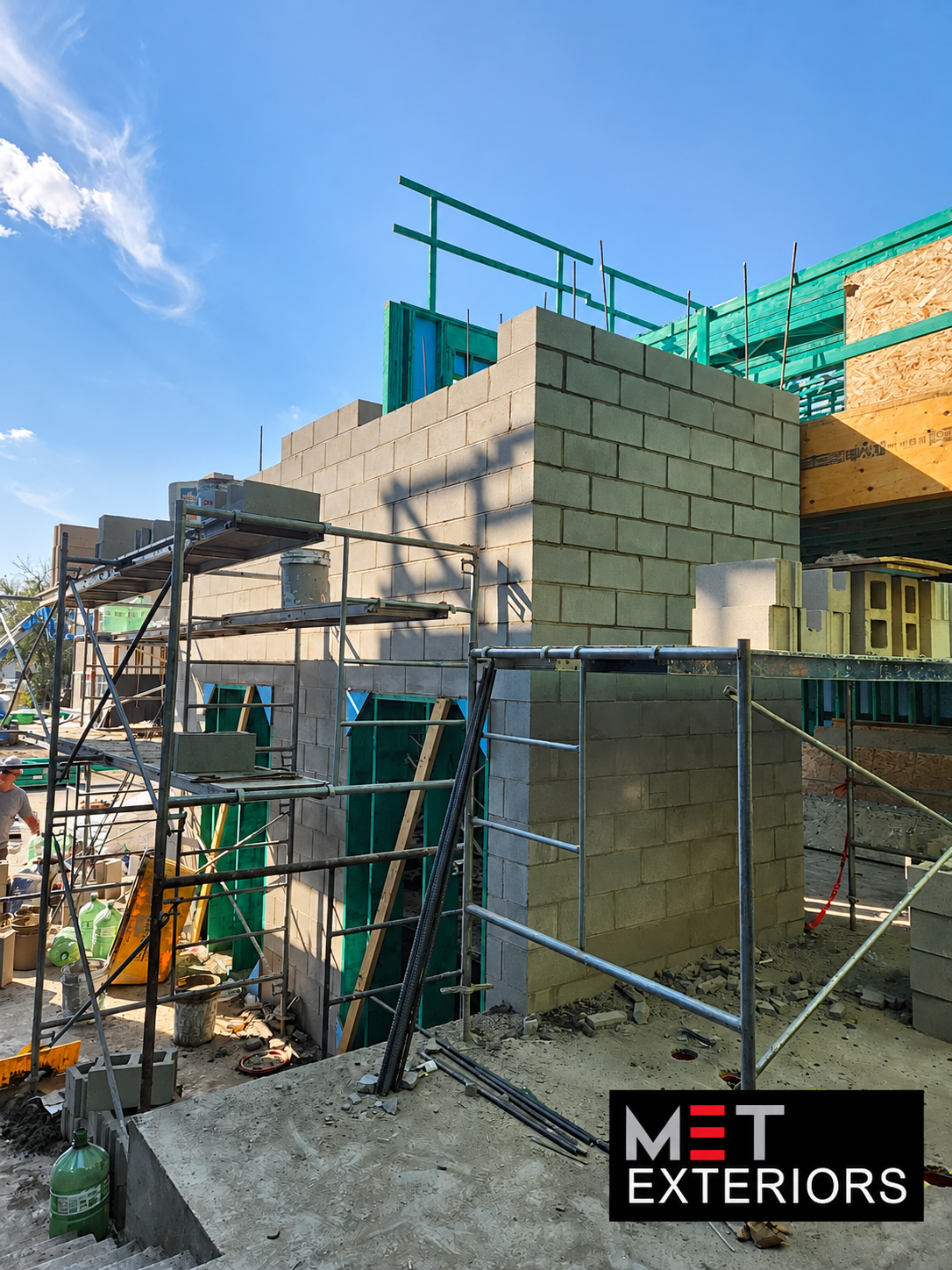
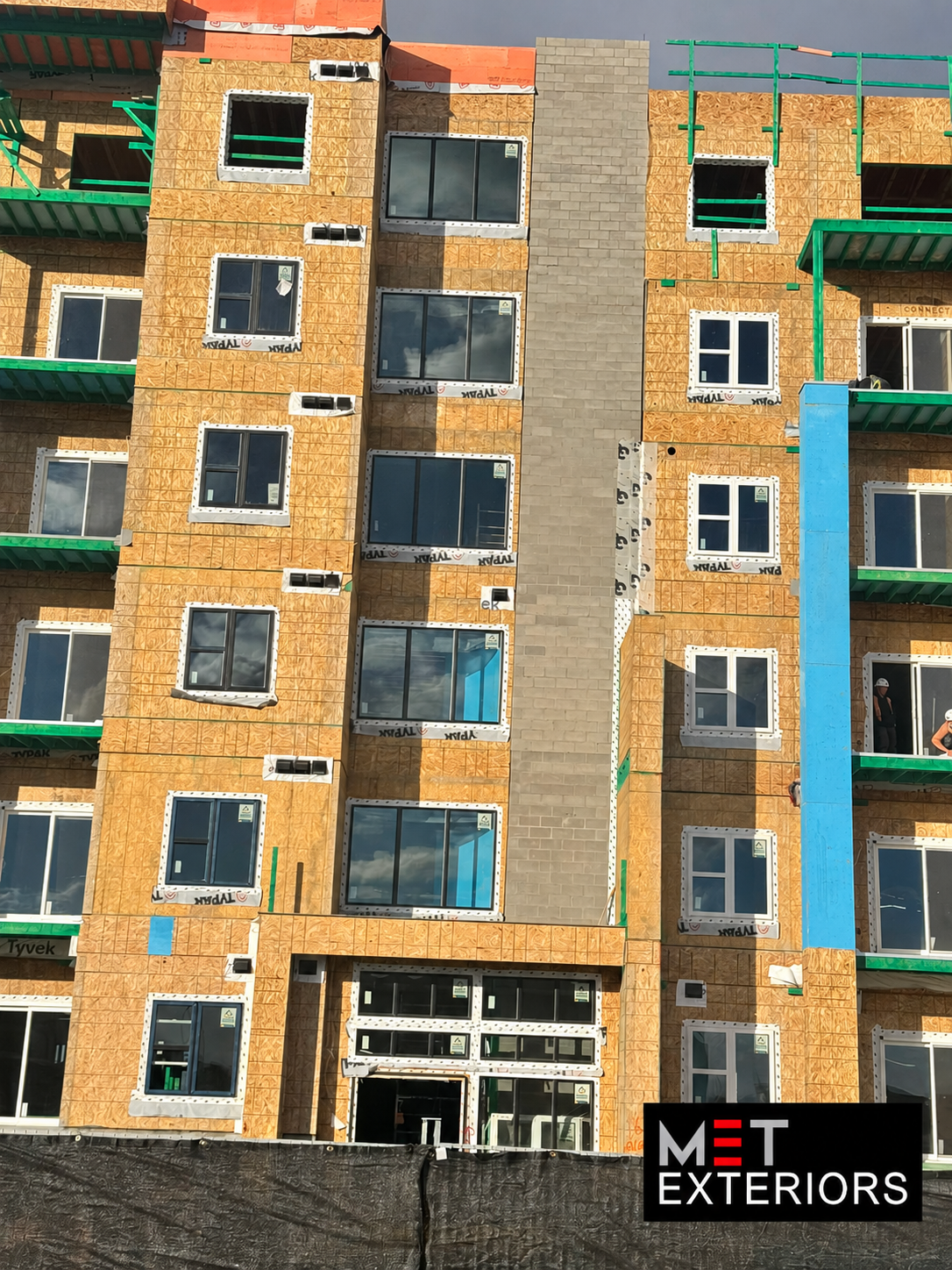
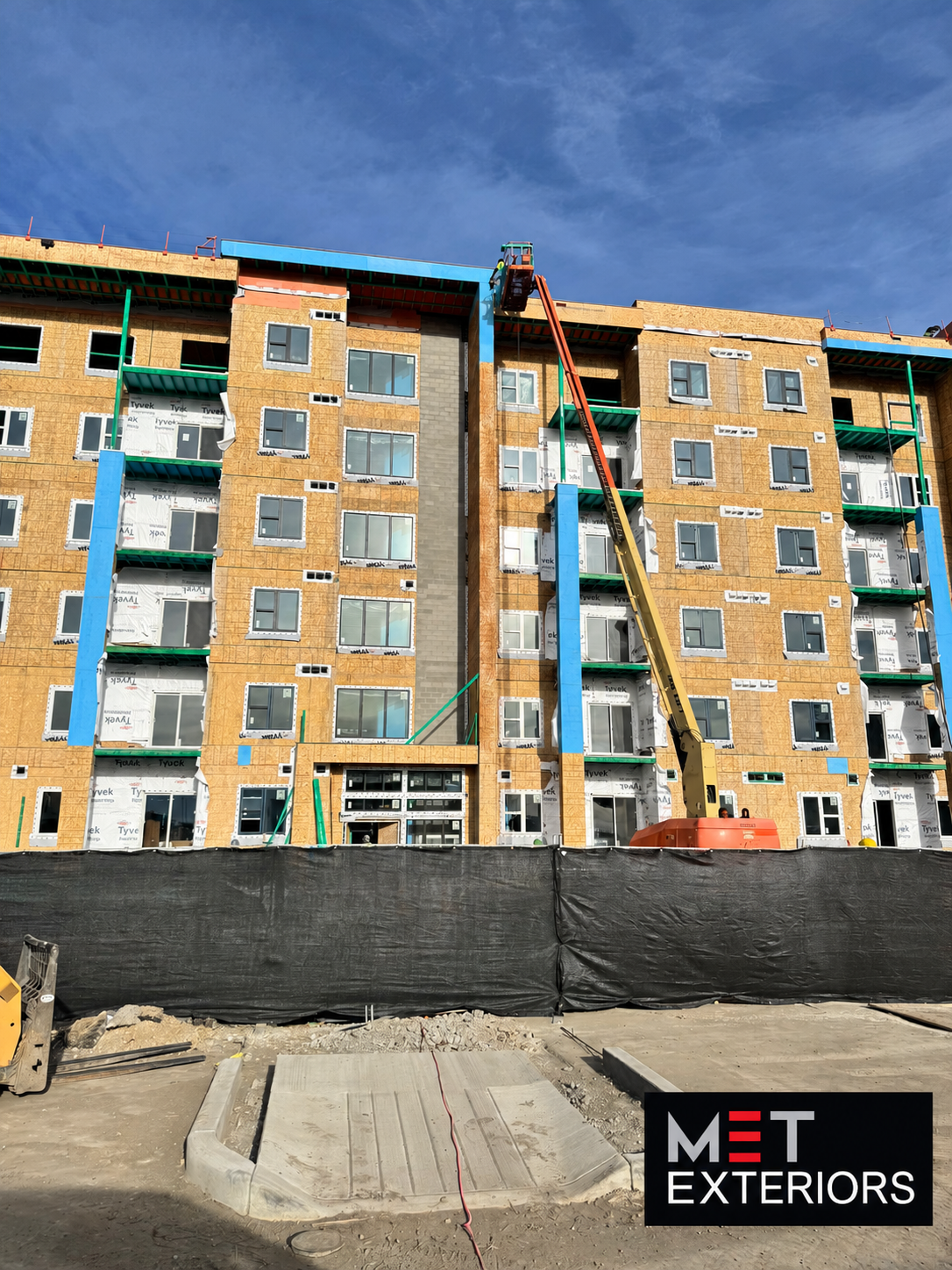
Met Exteriors completed concrete masonry unit (CMU) installation for a multi-storey commercial elevator shaft in Edmonton, Alberta. The scope involved concrete masonry units (CMU) installed as part of the building shaft assembly, with careful attention to layout, reinforcement, grout placement and coordination with the project drawings.
Elevator shafts are highly coordinated building elements. The masonry has to align with structural, architectural and elevator requirements, so accurate layout and consistent construction are essential from the first course upward.
Reinforced CMU Construction
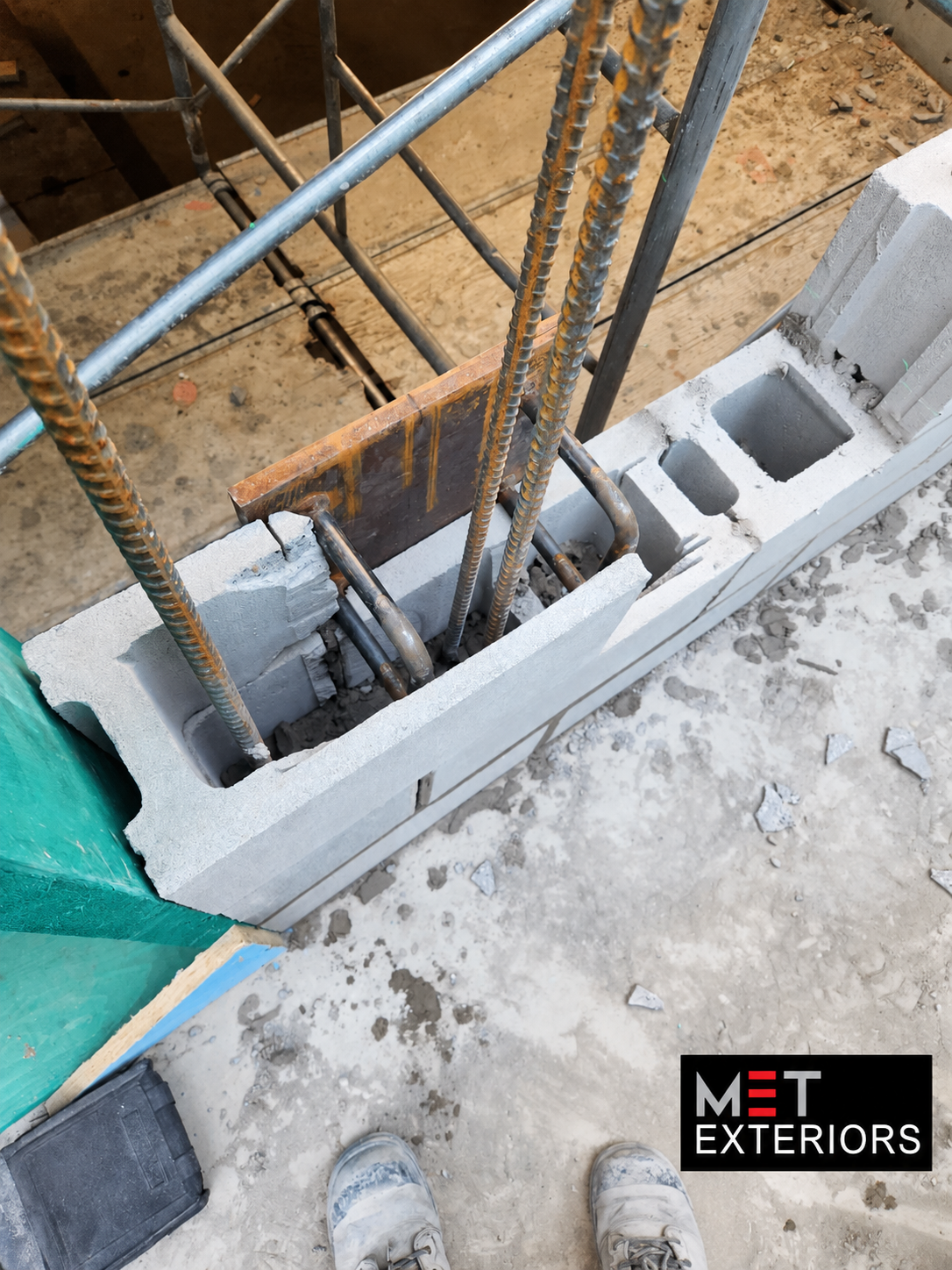
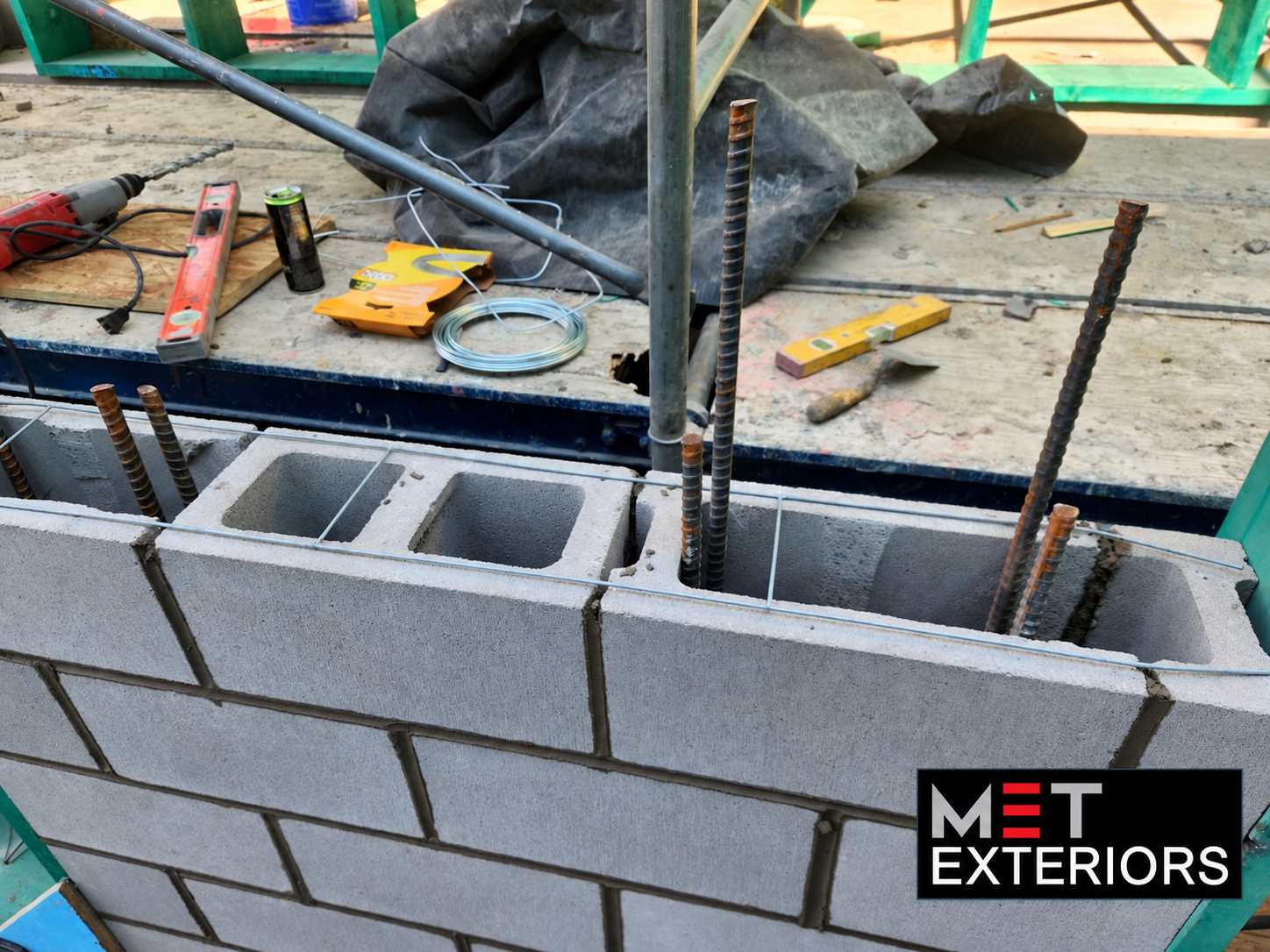
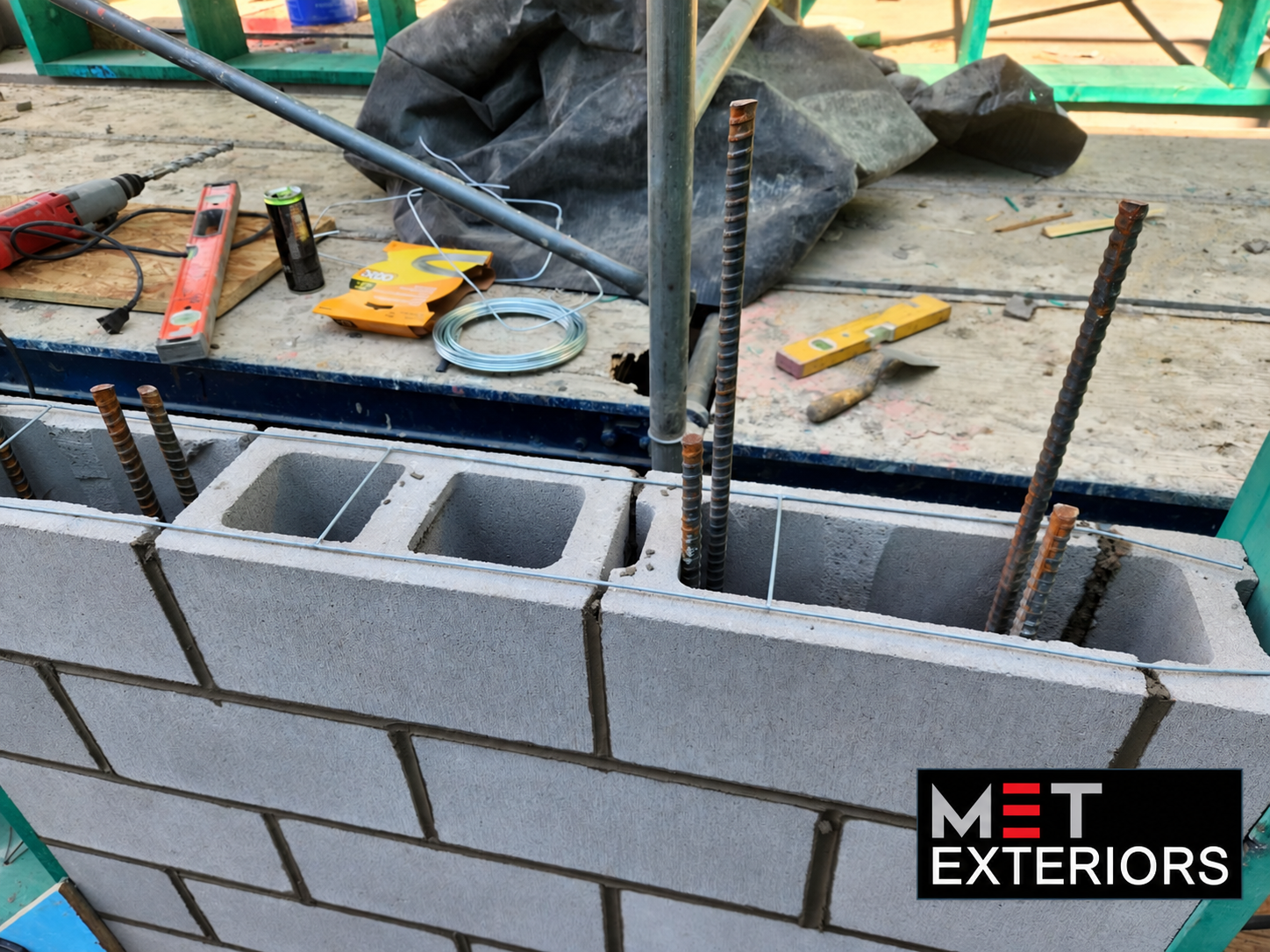
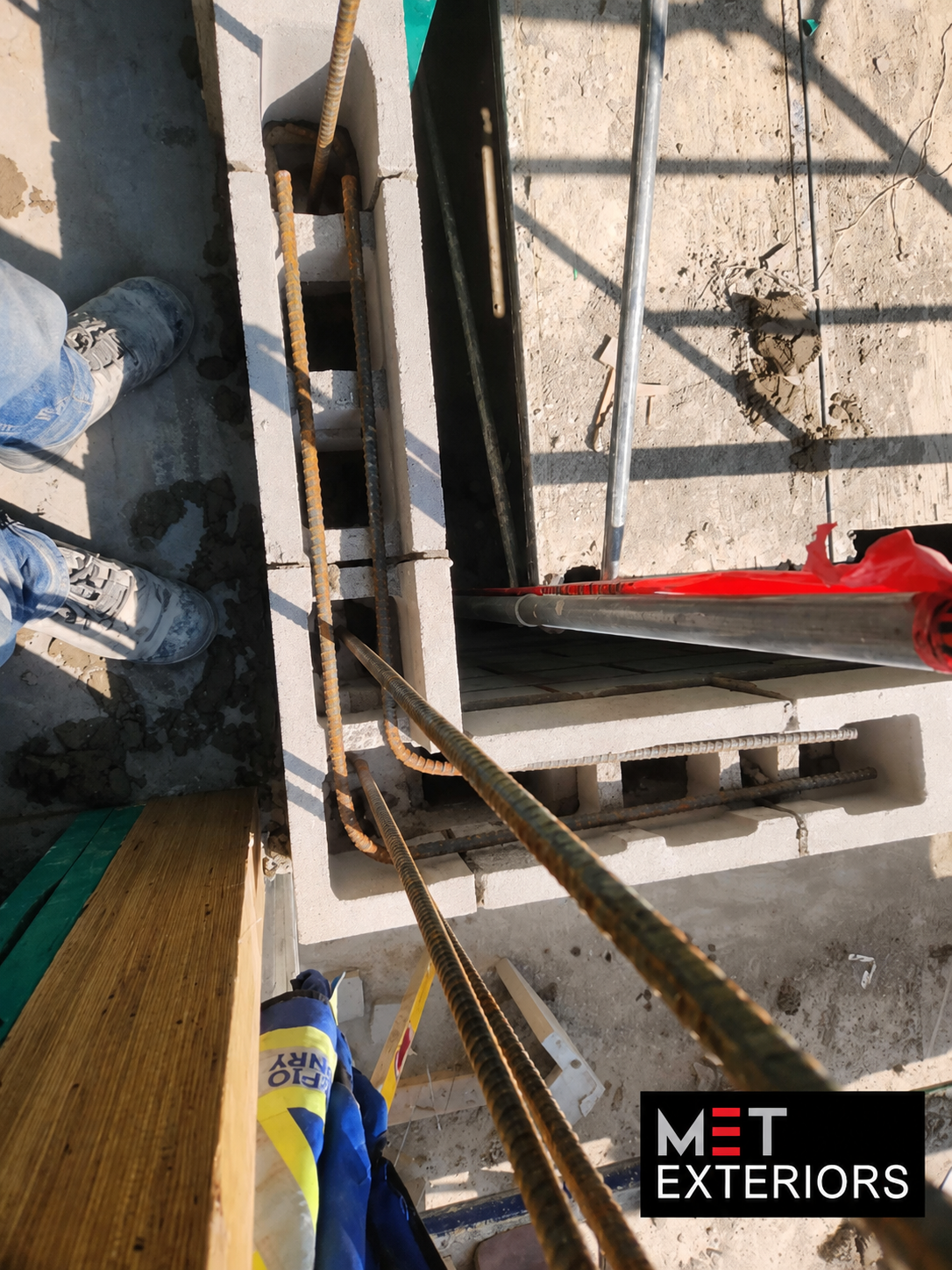
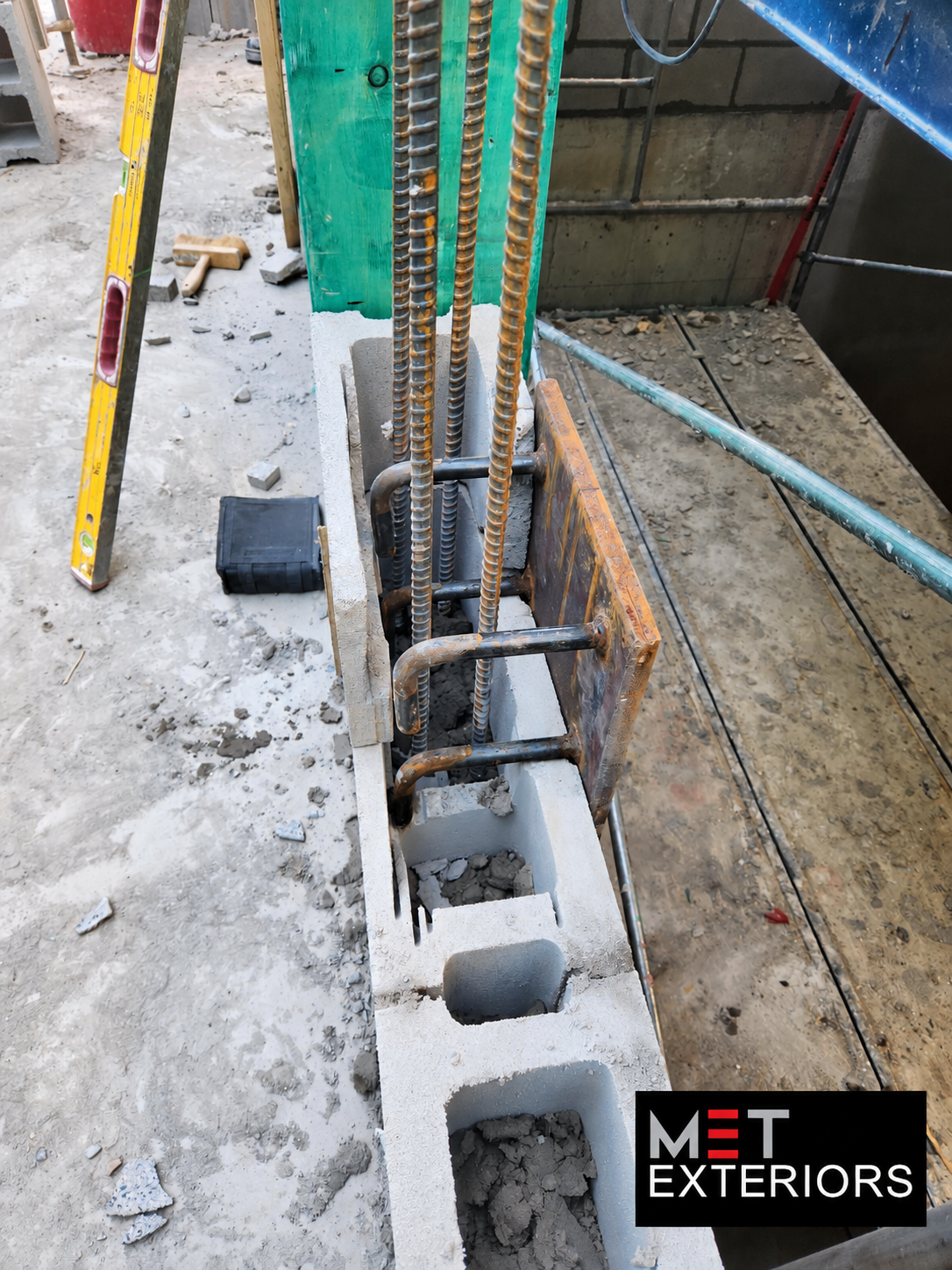
Concrete masonry units are commonly used for elevator and service shafts because they can form durable, noncombustible wall assemblies and can be reinforced where required by the engineered design. Reinforcing steel and grout are installed in the locations shown on the structural drawings, allowing the masonry wall to function as part of the specified building system.
The exact block size, reinforcement spacing, grout requirements and connection details depend on the engineered design. Our masonry work follows the project drawings and specifications rather than relying on a one-size-fits-all approach.
Layout, Plumb and Alignment
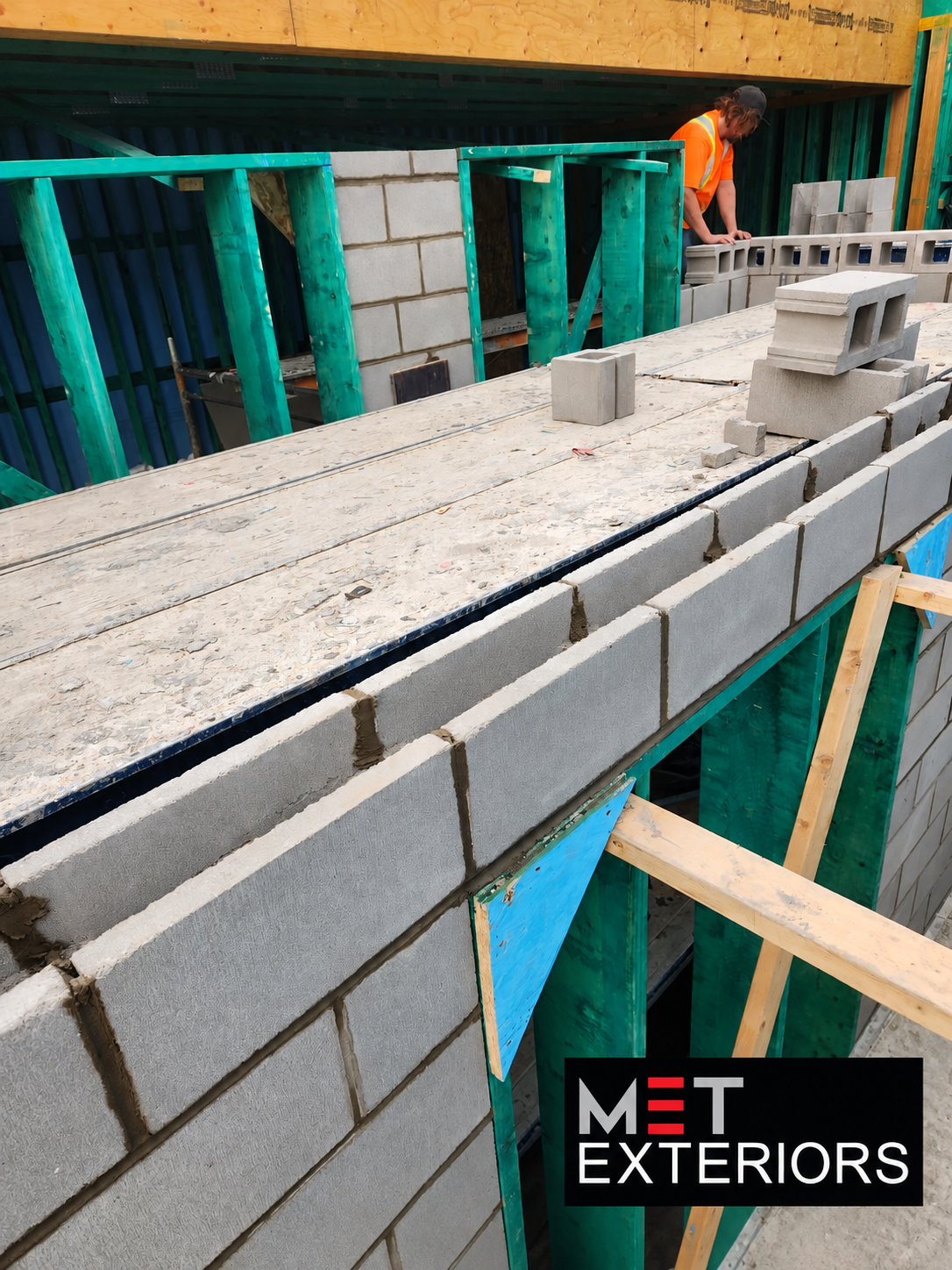
Accuracy is especially important for shaft construction. Wall locations, dimensions, openings and elevations must coordinate with the elevator equipment and surrounding structure. Courses are checked for level, walls are monitored for plumb, and corners and openings are kept square as the shaft rises.
Early layout errors can become more difficult to correct at higher levels, so consistent checking throughout construction helps maintain the required geometry and reduces coordination problems for following trades.
Grouting and Reinforcement Coordination
Where the design calls for reinforced masonry, steel is placed in designated block cells and grout is installed in accordance with the project requirements. The sequence of masonry, reinforcement, inspections and grouting needs to be coordinated so the specified elements remain accessible before they are concealed.
Cleanout locations, lift heights and grout procedures vary depending on the wall design and project specifications. Proper coordination helps ensure that the reinforced cells and bond-beam areas can be completed as intended.
Fire-Resistance-Rated Shaft Assemblies
CMU is often used as part of fire-resistance-rated shaft and separation assemblies. The required fire-resistance rating is determined by the complete approved assembly, including the masonry unit, wall thickness, grout, reinforcement and other specified components. It is therefore more accurate to evaluate the complete wall design than to assume a specific fire rating from the block alone.
For commercial and multi-family buildings, shaft construction must follow the applicable architectural and structural documents and the requirements of the authority having jurisdiction.
Commercial Masonry Coordination
Elevator shaft work requires coordination with general contractors, structural engineers, elevator trades and other site teams. Openings, embeds, lintels, bearing conditions and adjacent floor construction can all affect the masonry sequence.
Met Exteriors works with project teams to coordinate these interfaces and complete the masonry scope in a practical sequence. Clear communication before each stage helps avoid unnecessary rework and supports smoother inspections and follow-on work.
CMU Elevator Shaft Edmonton Project
This completed Edmonton project demonstrates our experience with structural and commercial masonry applications. In addition to elevator shafts, our masonry scopes can include concrete block walls, fire separations, service rooms, commercial partitions and other CMU work shown on the project drawings.
Successful CMU construction also depends on planning material deliveries, access and work sequencing around other trades. On multi-storey projects, these practical site considerations can affect productivity and should be coordinated with the general contractor as the masonry progresses.
We also provide brick masonry, thin brick veneer, natural and manufactured stone, masonry repair and restoration, and other exterior construction services throughout Edmonton and Alberta.
Learn more about our masonry services, view our completed projects, or contact Met Exteriors to discuss a CMU, concrete block or commercial masonry project. For technical information about concrete masonry design and construction, visit the Canada Masonry Design Centre.