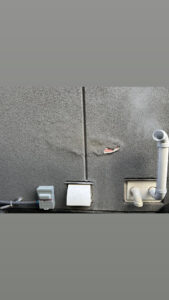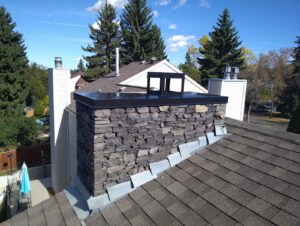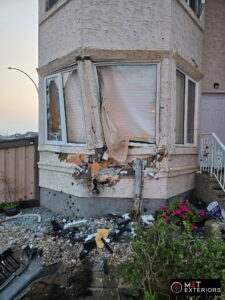
Warm furnace exhaust contains water vapour. In Edmonton winters, wind can push the exhaust plume back toward a cold exterior wall, where moisture may condense and freeze. Repeated wetting and freeze-thaw cycles can contribute to damaged stucco and other exterior finishes.
Why Exhaust Location Matters
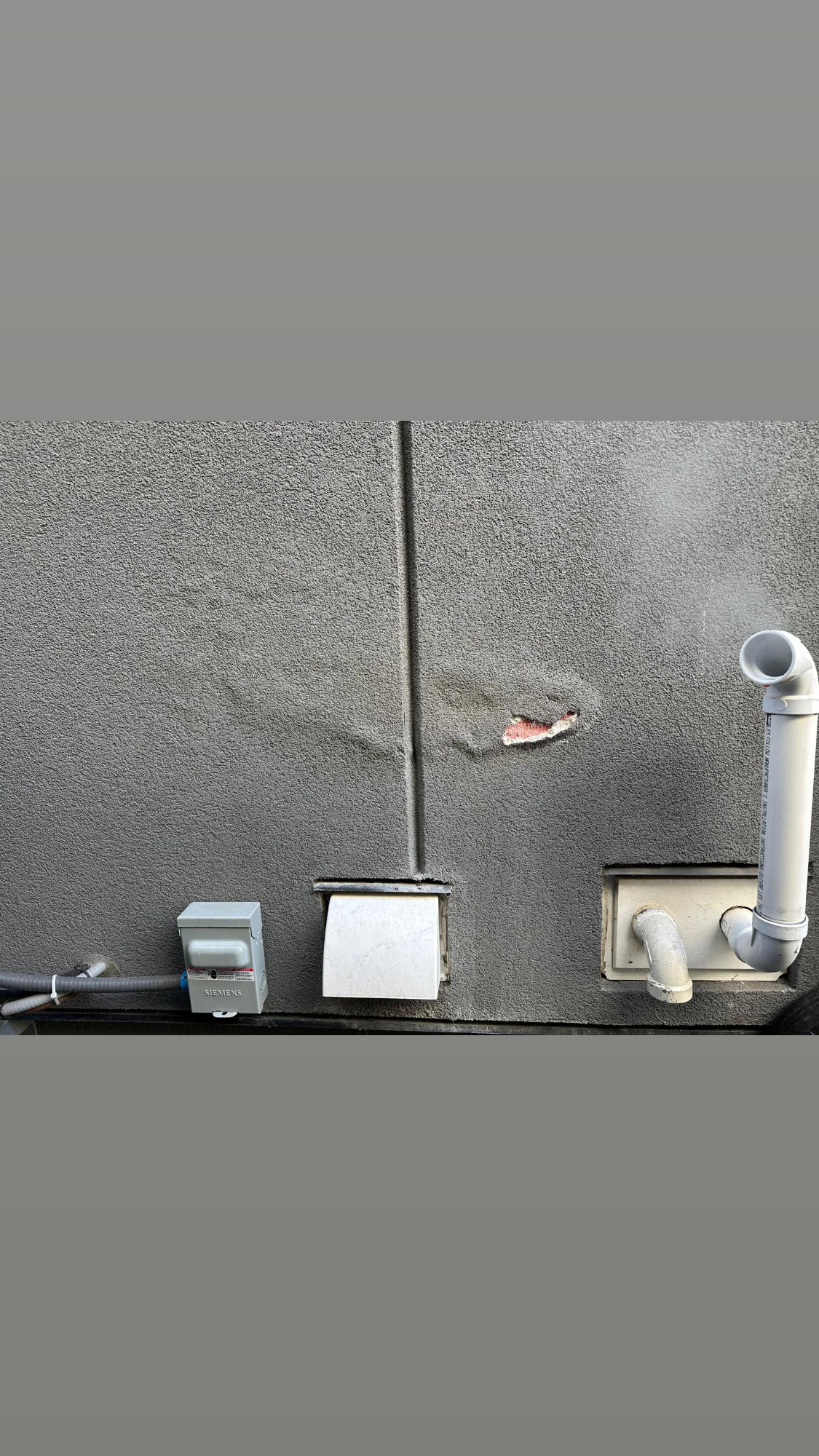
Exhaust termination location, direction, wind exposure and clearance from nearby surfaces all affect where moisture travels. The photograph below highlights the visible wall damage and adjacent exhaust pipe. The image illustrates a potential moisture mechanism; a site assessment is required to establish the specific cause of this damage.
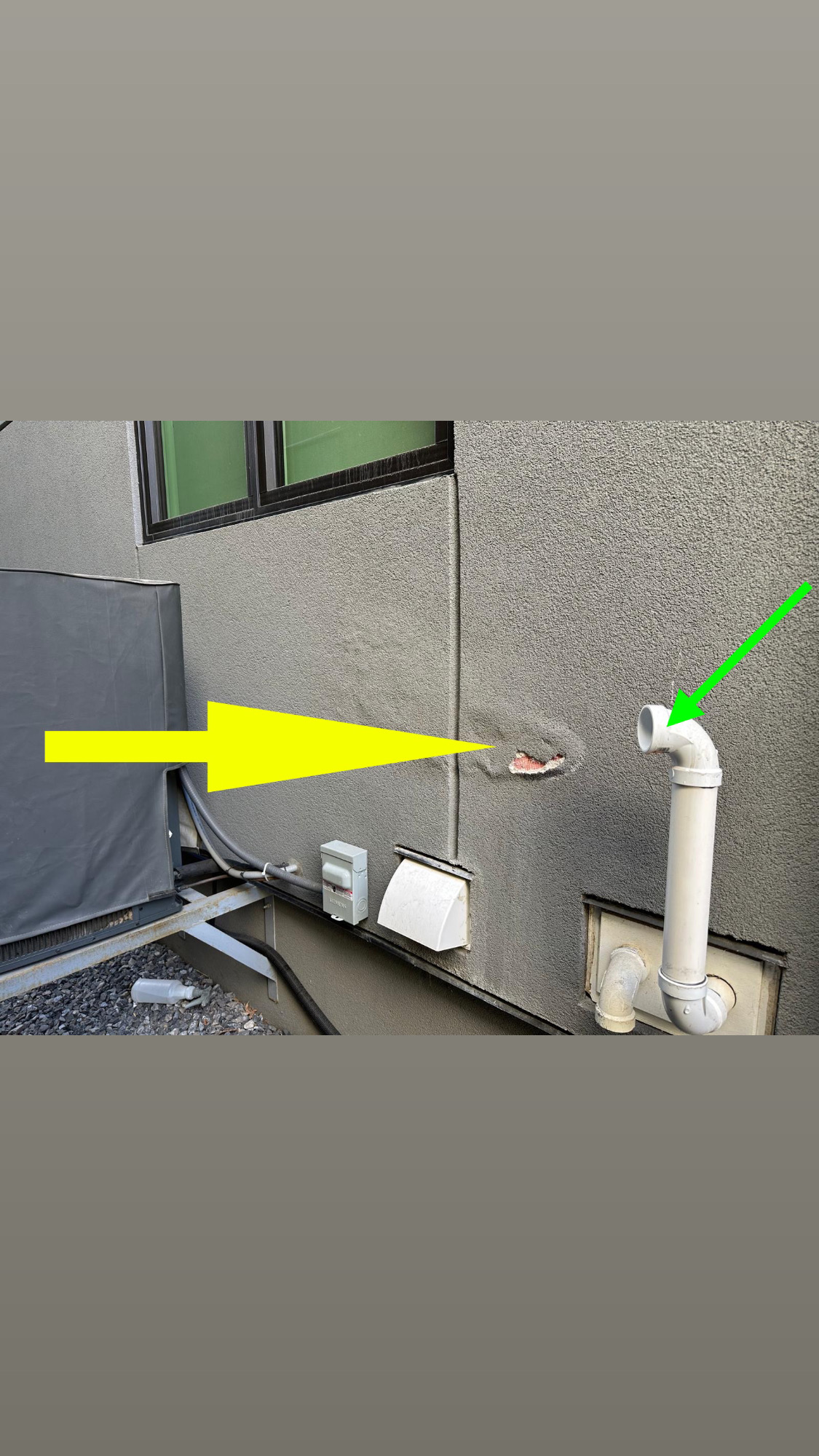
Signs of Possible Exhaust-Related Wall Damage
- Ice accumulation or persistent dampness near an exhaust termination
- Discolouration, cracking or blistering of the stucco finish
- Loose or delaminating coating near the vent
- Exhaust repeatedly blowing back toward the exterior wall
How to Prevent Further Damage
Furnace exhaust terminations must comply with the appliance manufacturer’s installation instructions and applicable gas codes. There is no universal safe distance for every installation. A qualified HVAC or gas-fitting professional should assess exhaust location, clearances, recirculation and any needed modifications. Never block or reposition a gas appliance exhaust pipe yourself.
After the moisture source has been addressed, an exterior contractor can inspect the wall and determine whether damaged stucco requires localized repair or replacement.
Exterior Stucco Inspections and Repairs in Edmonton
Met Exteriors assesses and repairs exterior stucco and building-envelope finishes in Edmonton and surrounding Alberta communities. We do not perform gas appliance or venting safety inspections.
Contact Met Exteriors for an exterior wall inspection or repair estimate.